2026 RBC Heritage - Hilton Head Island, SC
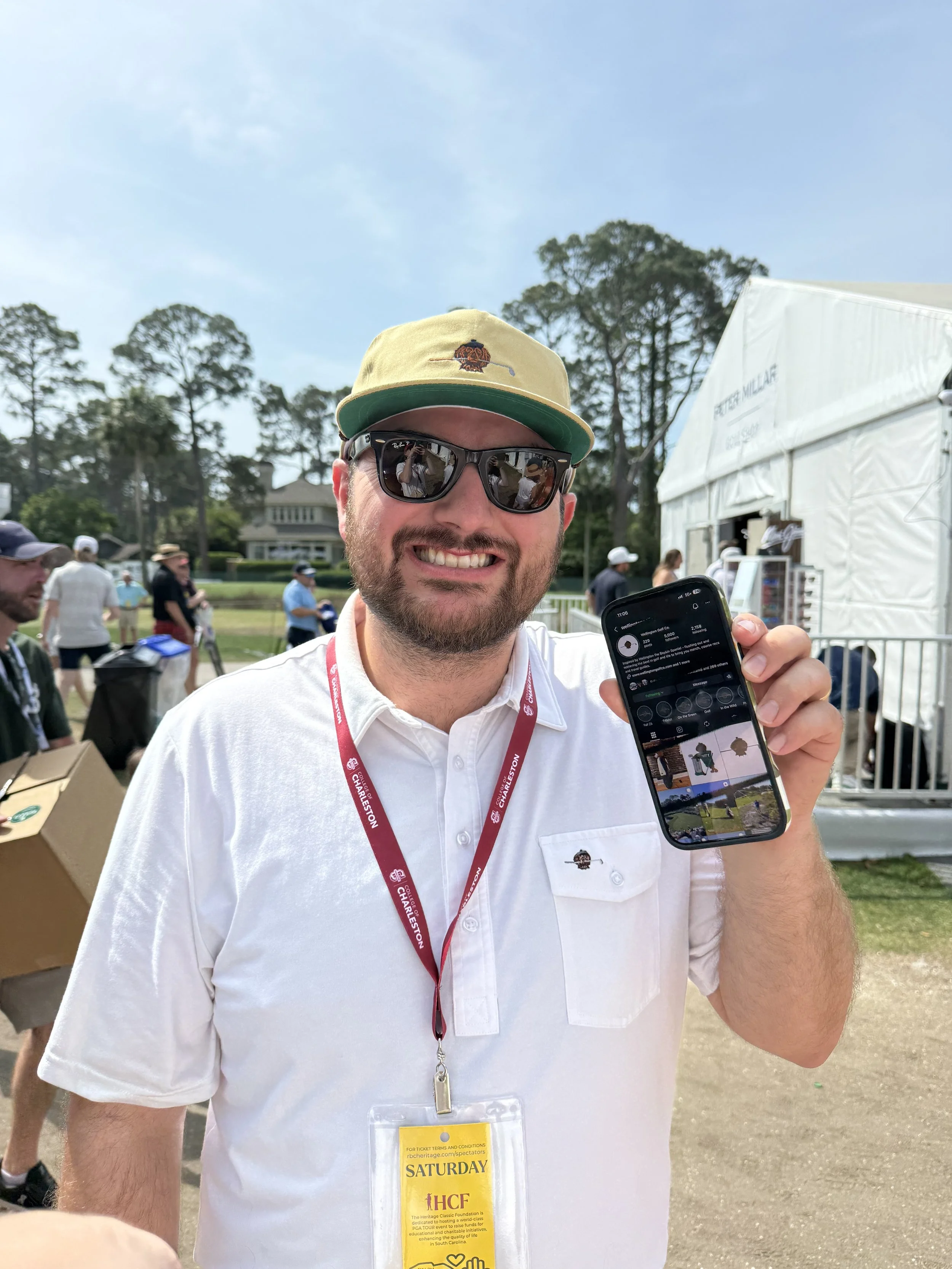
I had the opportunity to attend the Friday and Saturday rounds at the 2026 RBC Heritage, played annually on the Harbour Town Golf links which is part of the Sea Pines Resort on Hilton Head Island. Harbour Town doesn’t overwhelm you when you first arrive. It reveals itself slowly, which feels appropriate for a place that has always valued thought over force.
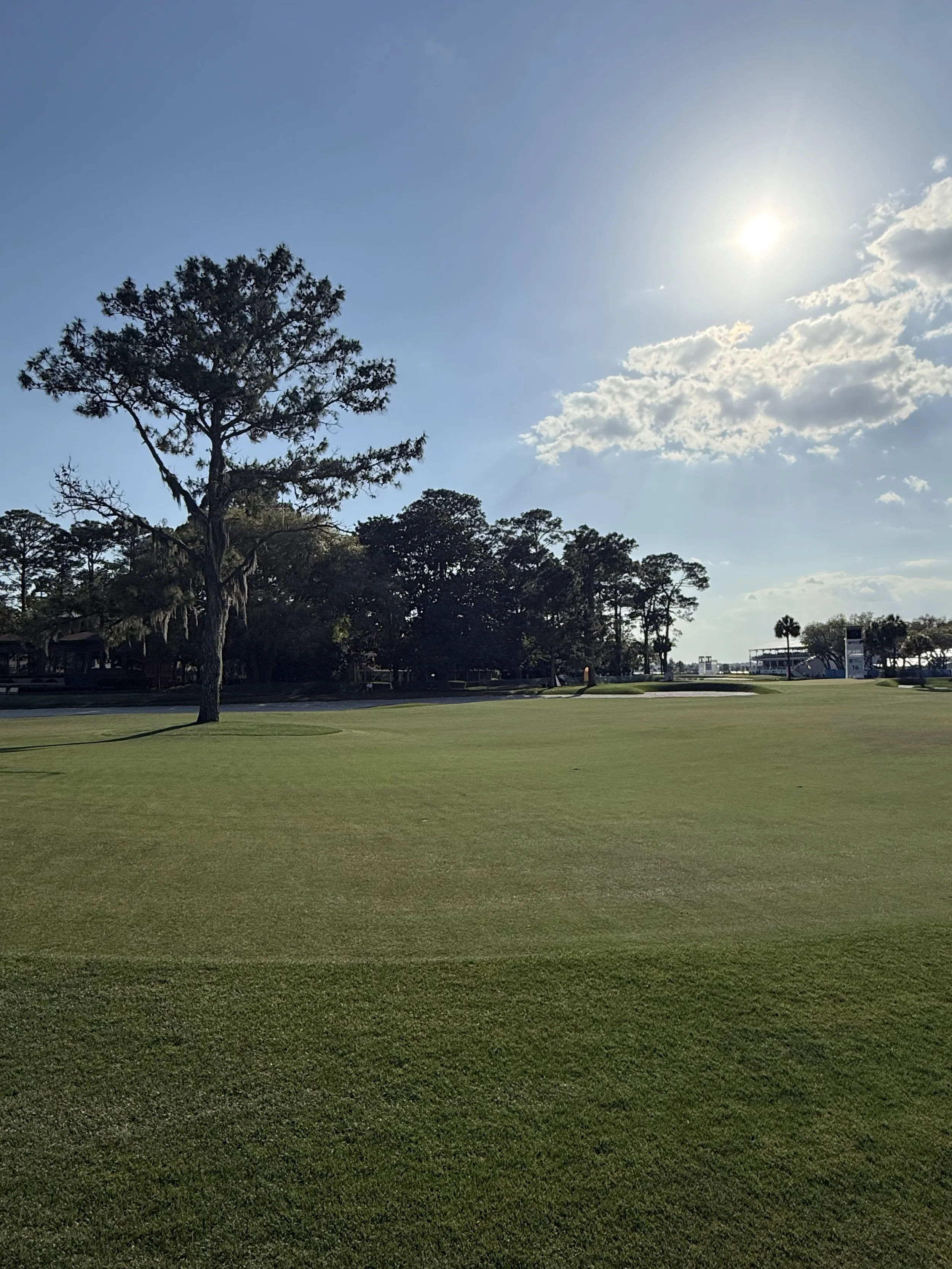
The RBC Heritage dates back to 1969, when Charles Fraser set out to create something different on Hilton Head Island. At a time when many courses were beginning to favor length and spectacle, Fraser envisioned a layout that rewarded precision and creativity. He brought in Pete Dye to design the course, with input from a young Jack Nicklaus, and together they produced Harbour Town Golf Links. It was tight, strategic, and at times uncomfortable in the best way. Sightlines are narrow, trees press in, and the greens remain some of the smallest on Tour. From the beginning, it asked players to think their way around rather than overpower it. I found an incredible Youtube video that RBC Heritage put out a number of years ago with footage from the first Heritage Classic, as well as narration from Jack Nicklaus as he discusses designing the course. I learned a ton about the strategy that went into the design from Jack’s perspective. This video also reaffirms the nostalgic feeling that is the RBC Heritage. It reminds me of the PGA Tour from a former era. Watch that here!
Arnold Palmer won that first tournament, immediately giving the event credibility and establishing a standard for the type of player who would succeed here. Over time, the list of winners has reinforced that identity. Johnny Miller, Tom Watson, and Davis Love III, who claimed five titles at Harbour Town, all thrived on control and shotmaking. More recently, players like Matt Fitzpatrick, Jordan Spieth, and Scottie Scheffler have continued that trend, proving that even in today’s game, there is still a place where discipline and positioning carry the day.
The tartan jacket fits seamlessly into that identity. It is a quieter symbol than some of golf’s more famous trophies, but it carries its own weight. The red plaid design draws from Scottish heritage and the traditions that underpin the game, while also giving the tournament something distinctly its own. It feels less like a spectacle and more like a badge of respect, which mirrors the course itself.
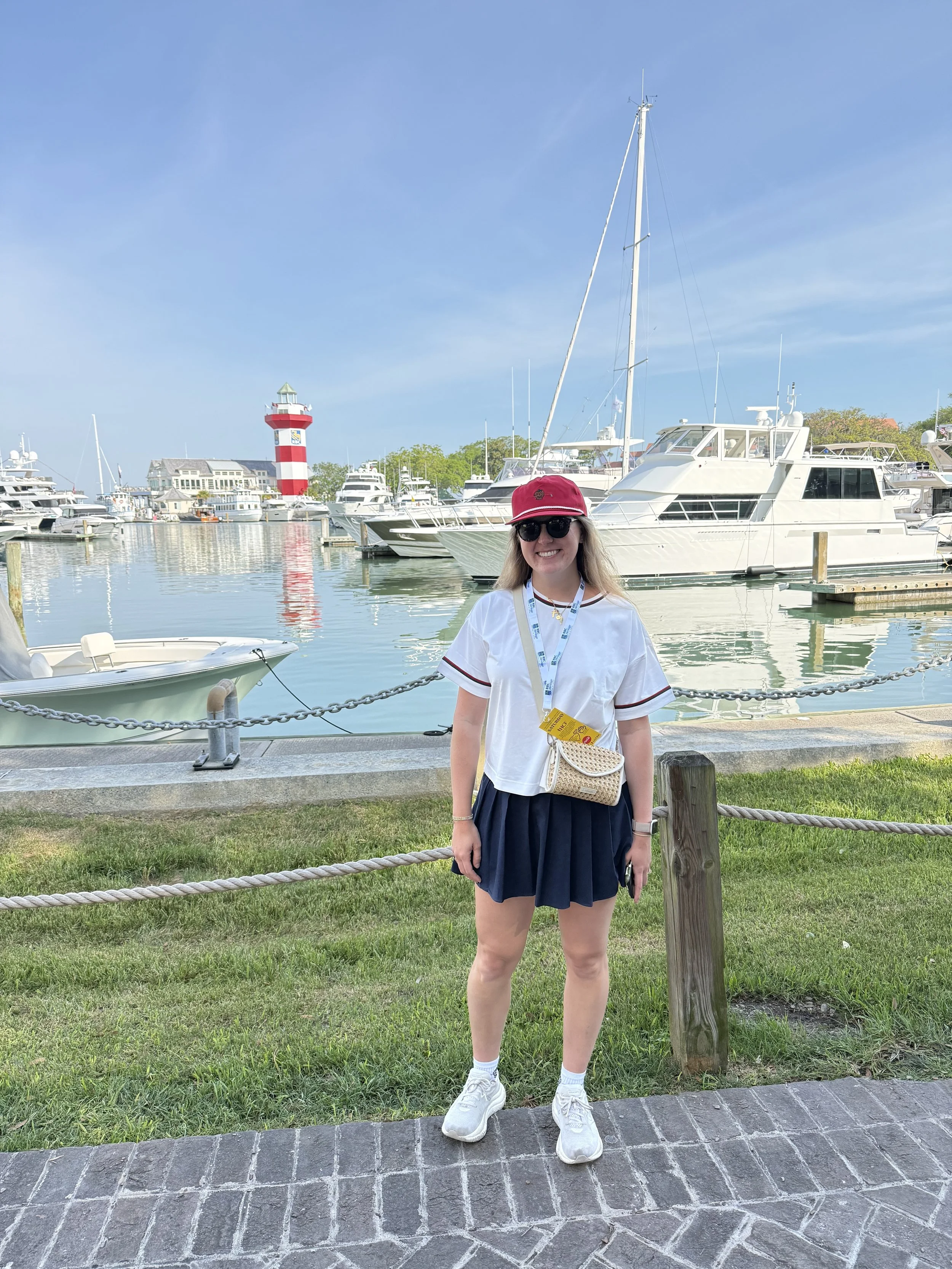
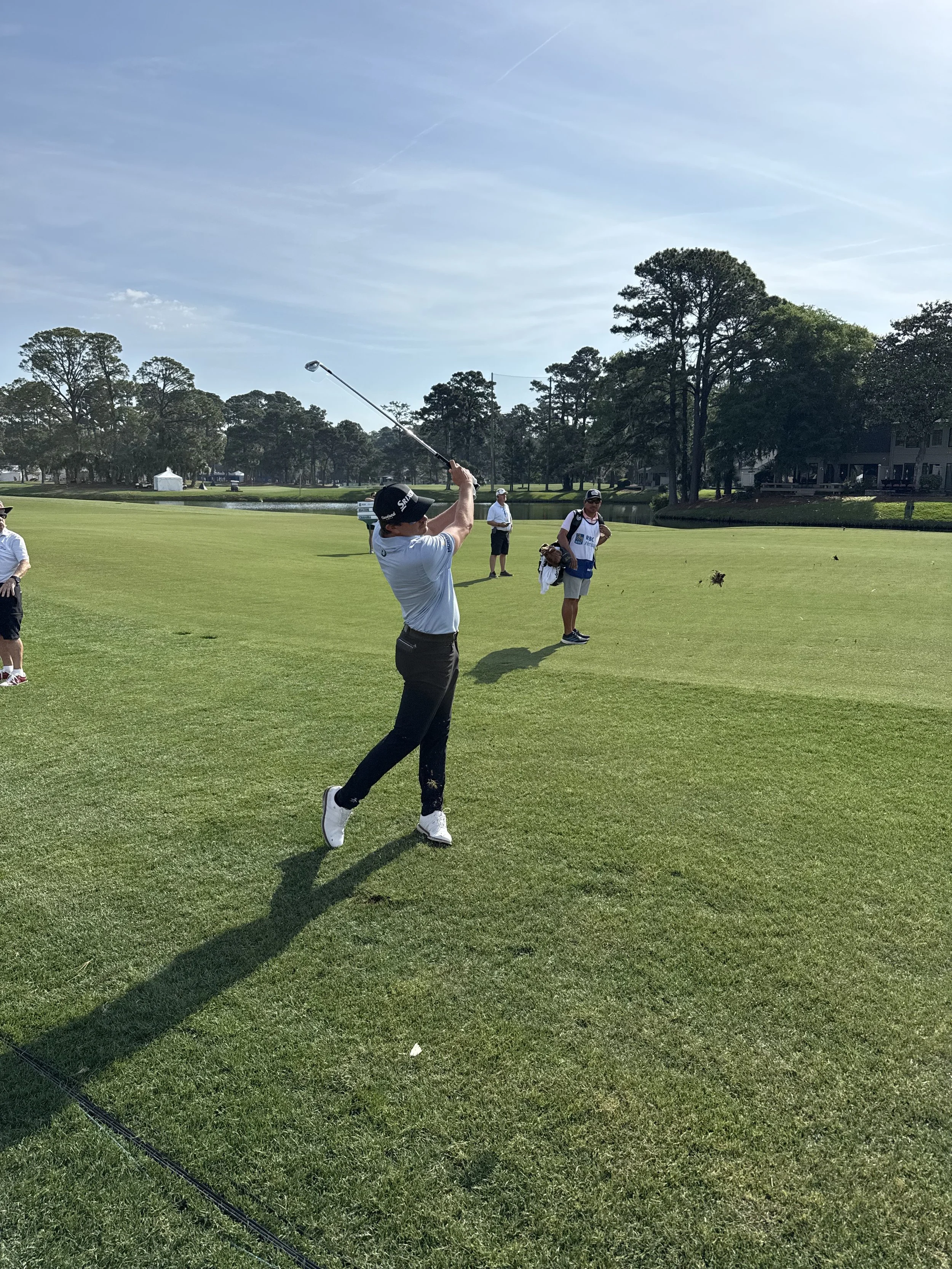
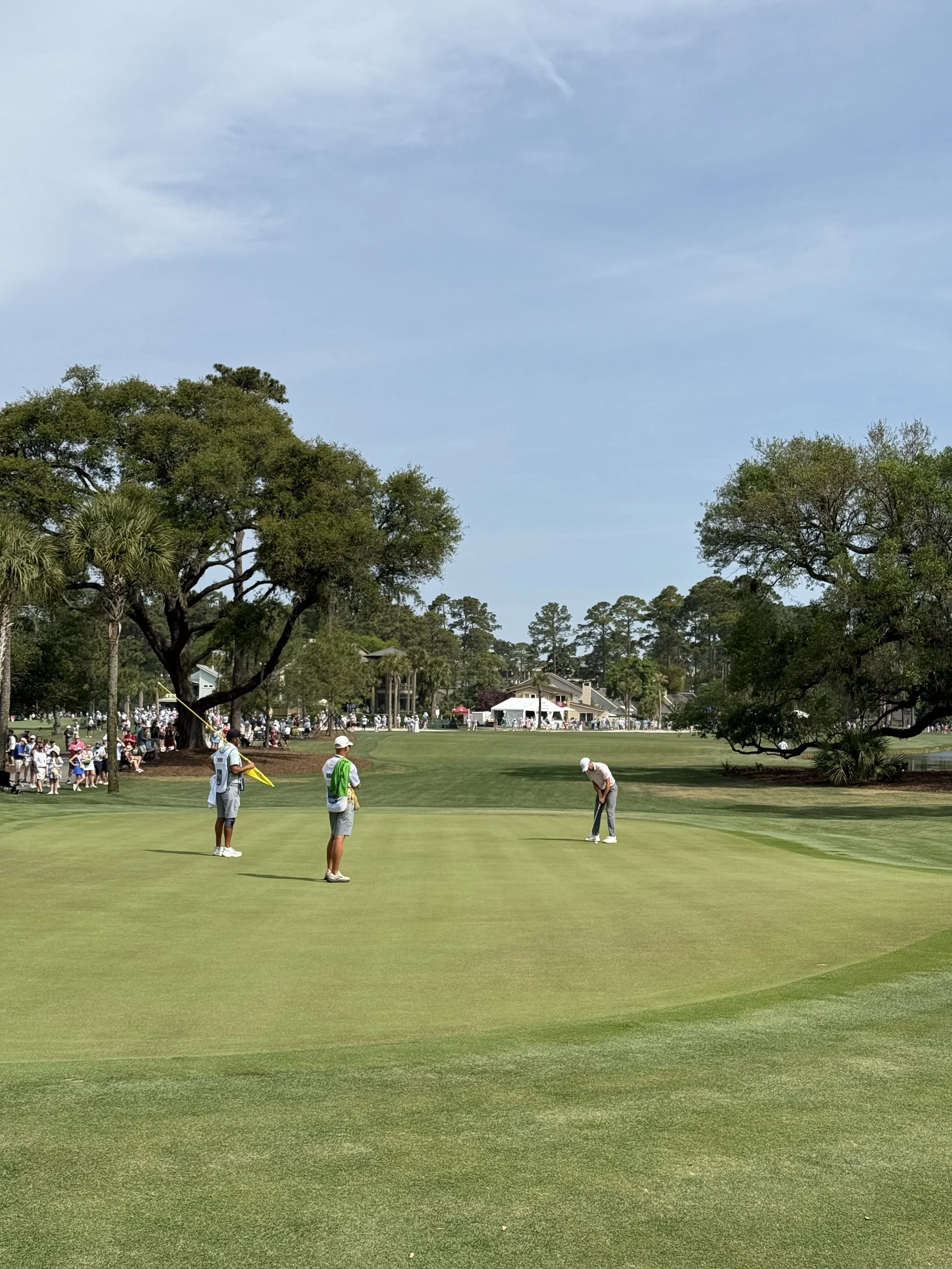
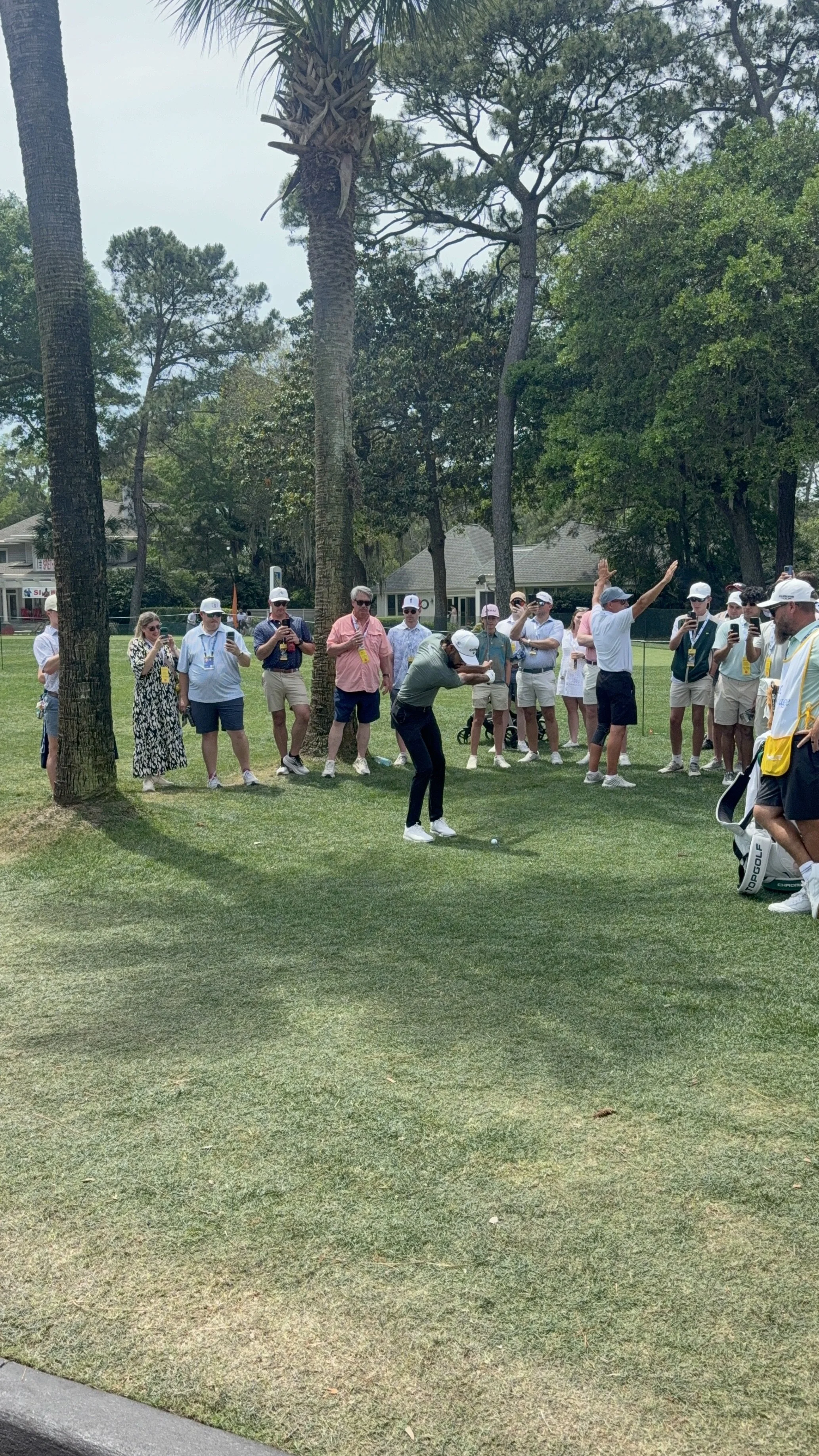
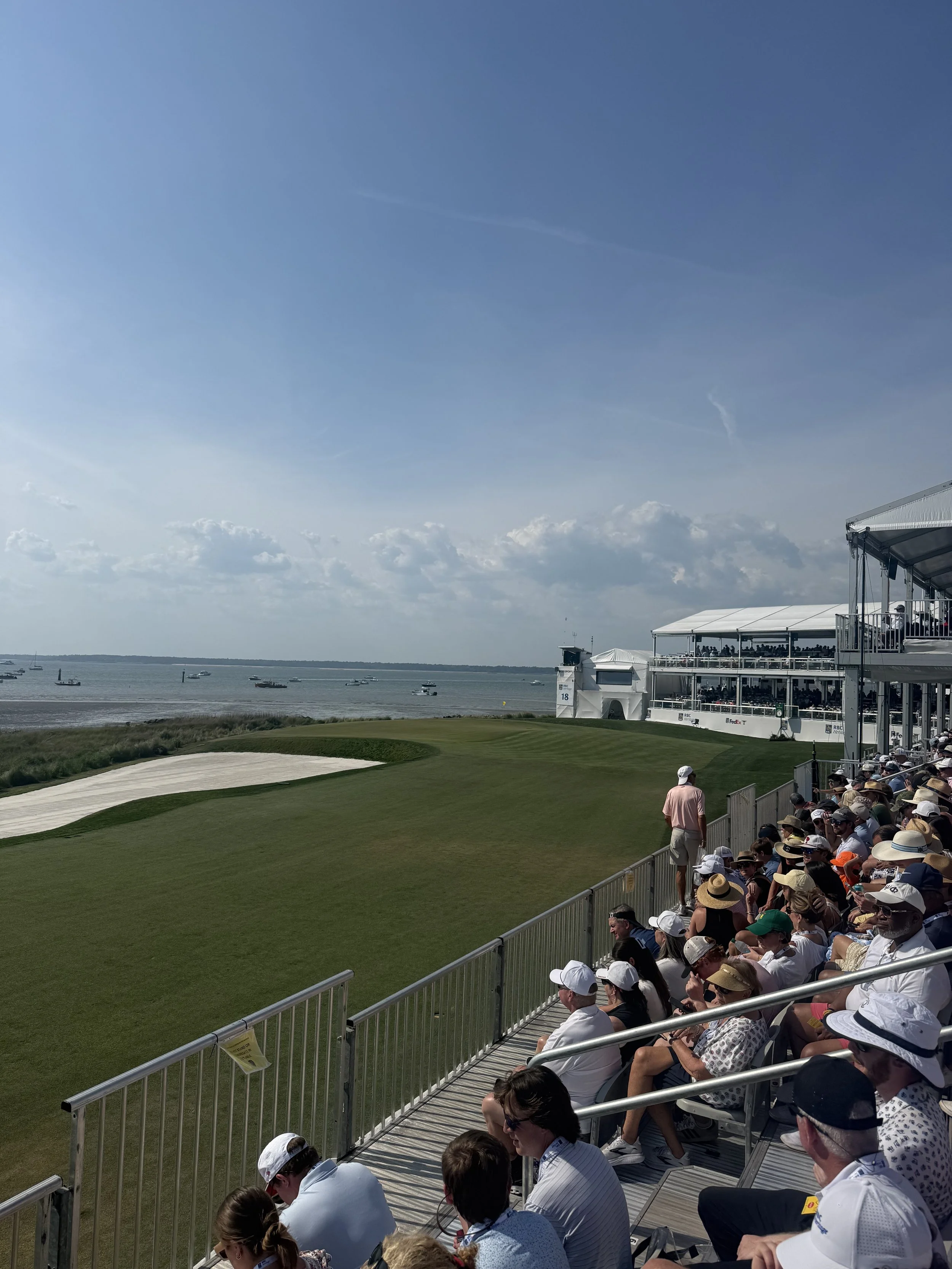
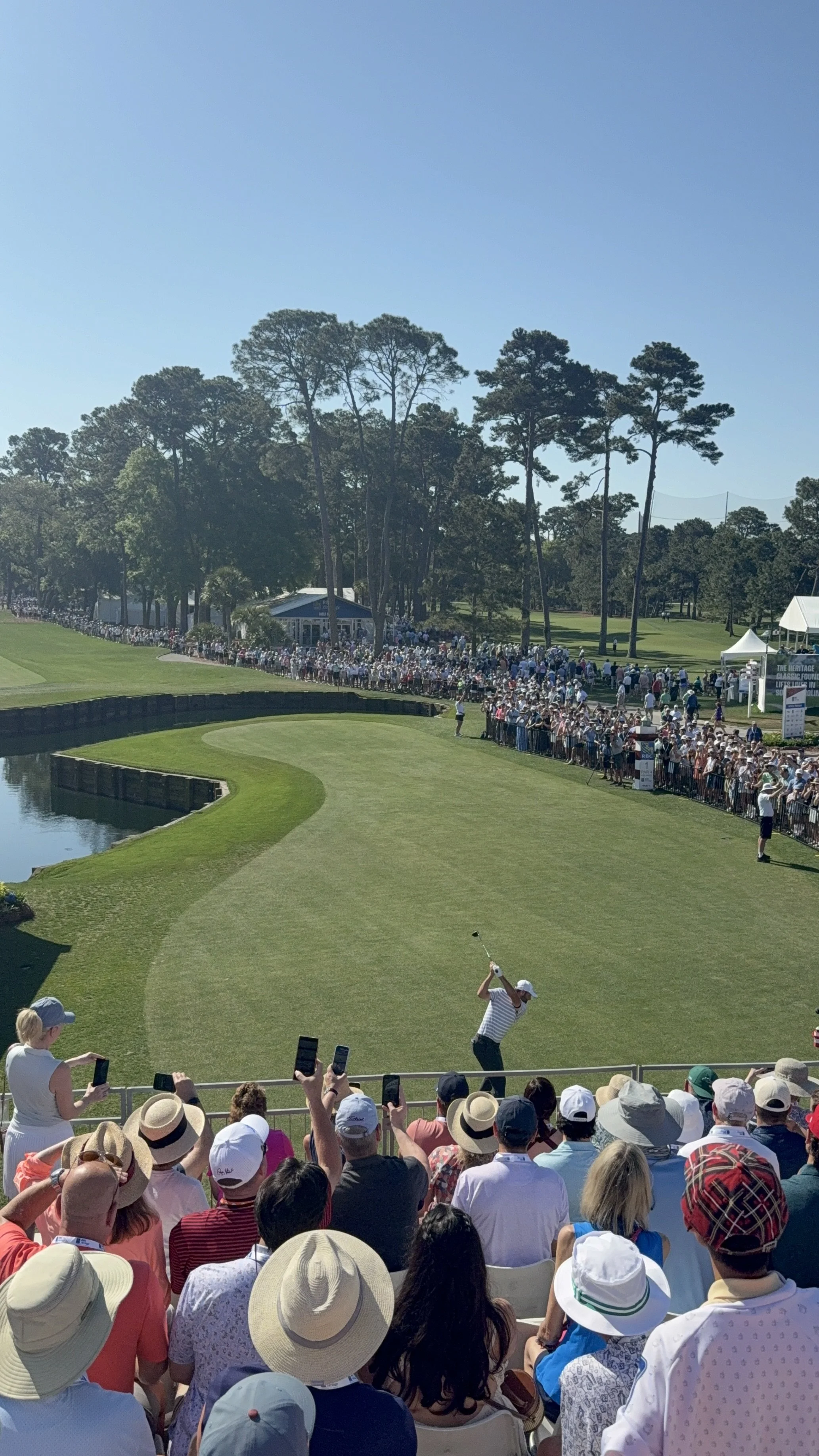
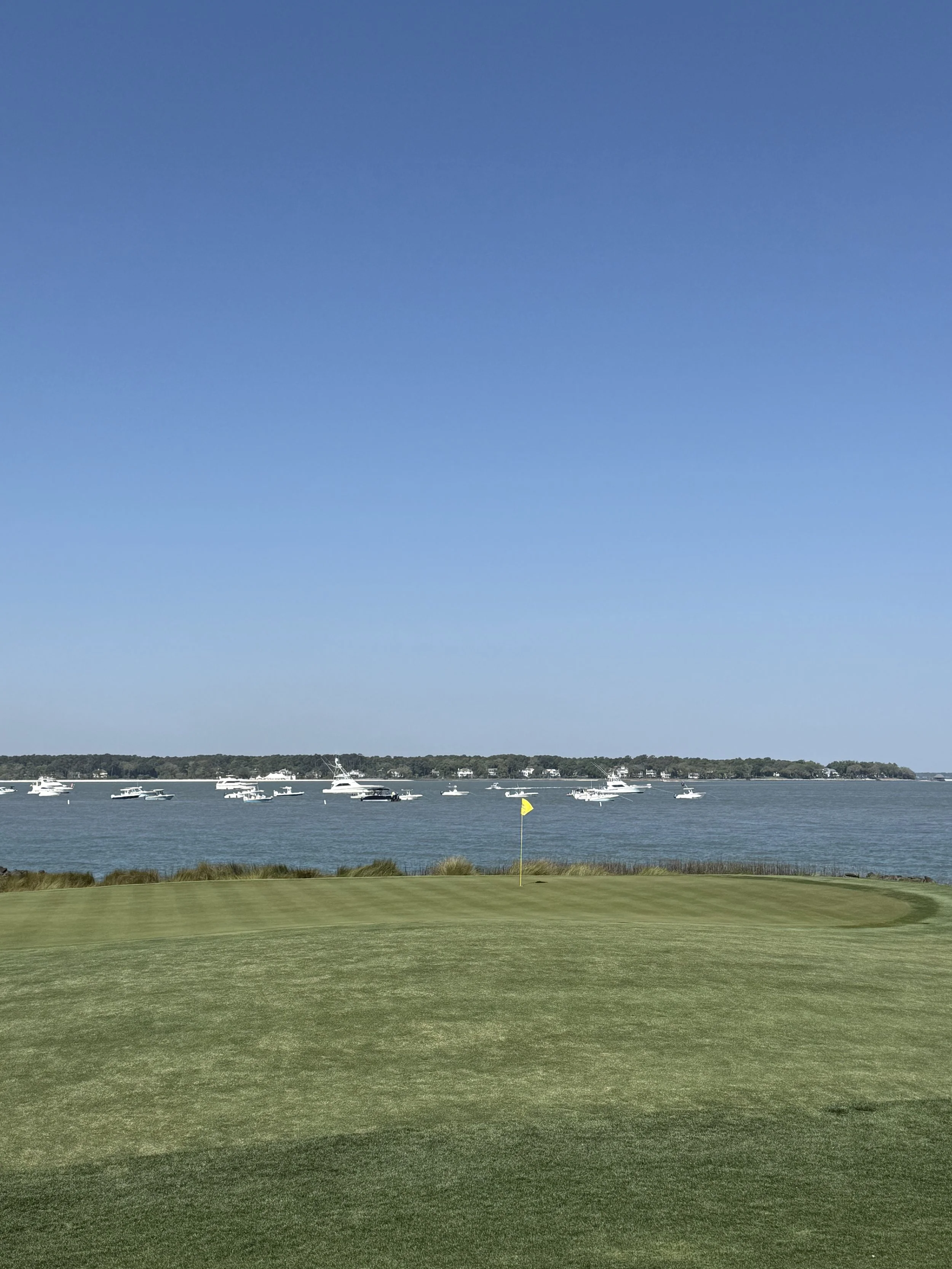
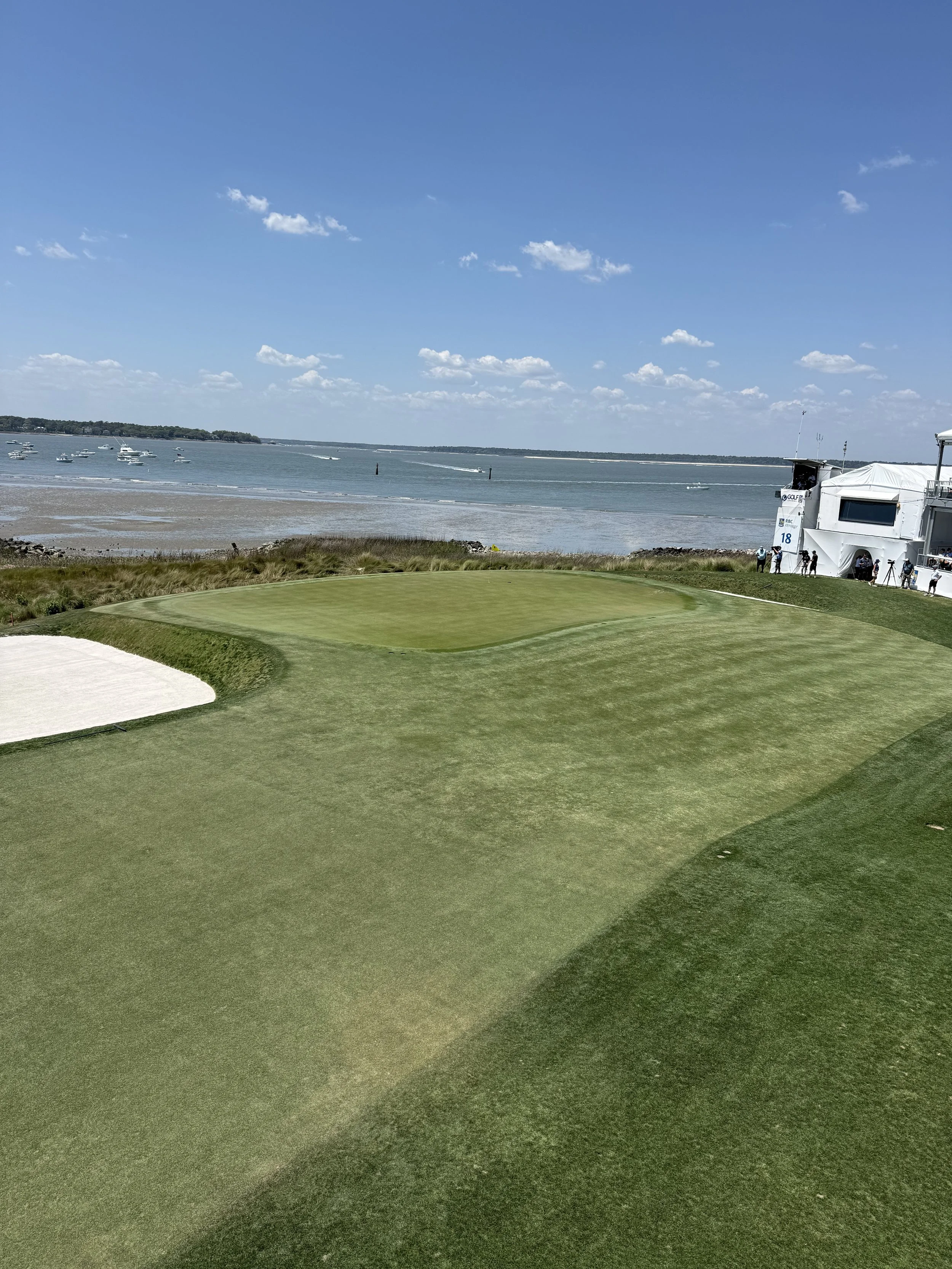
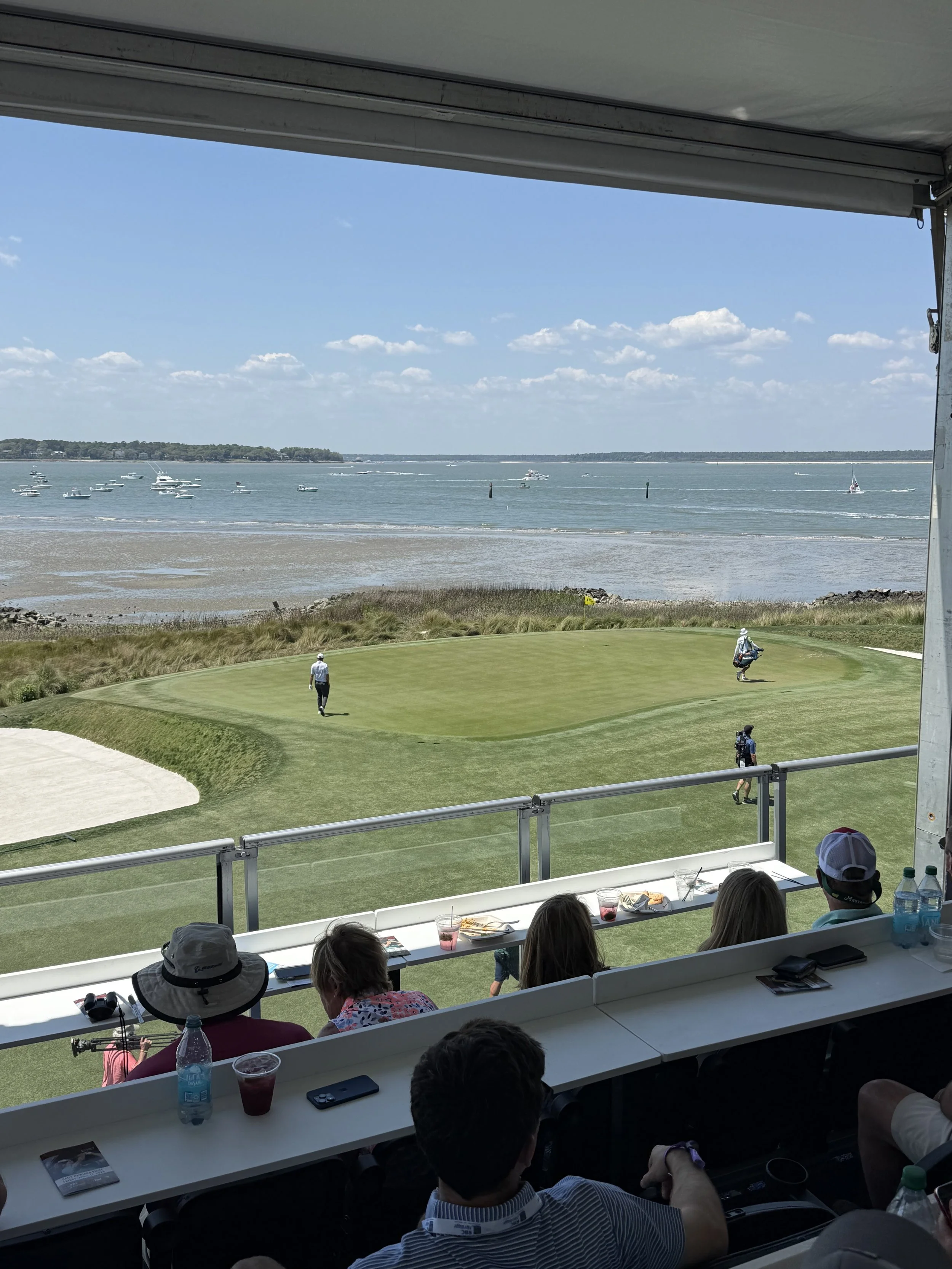
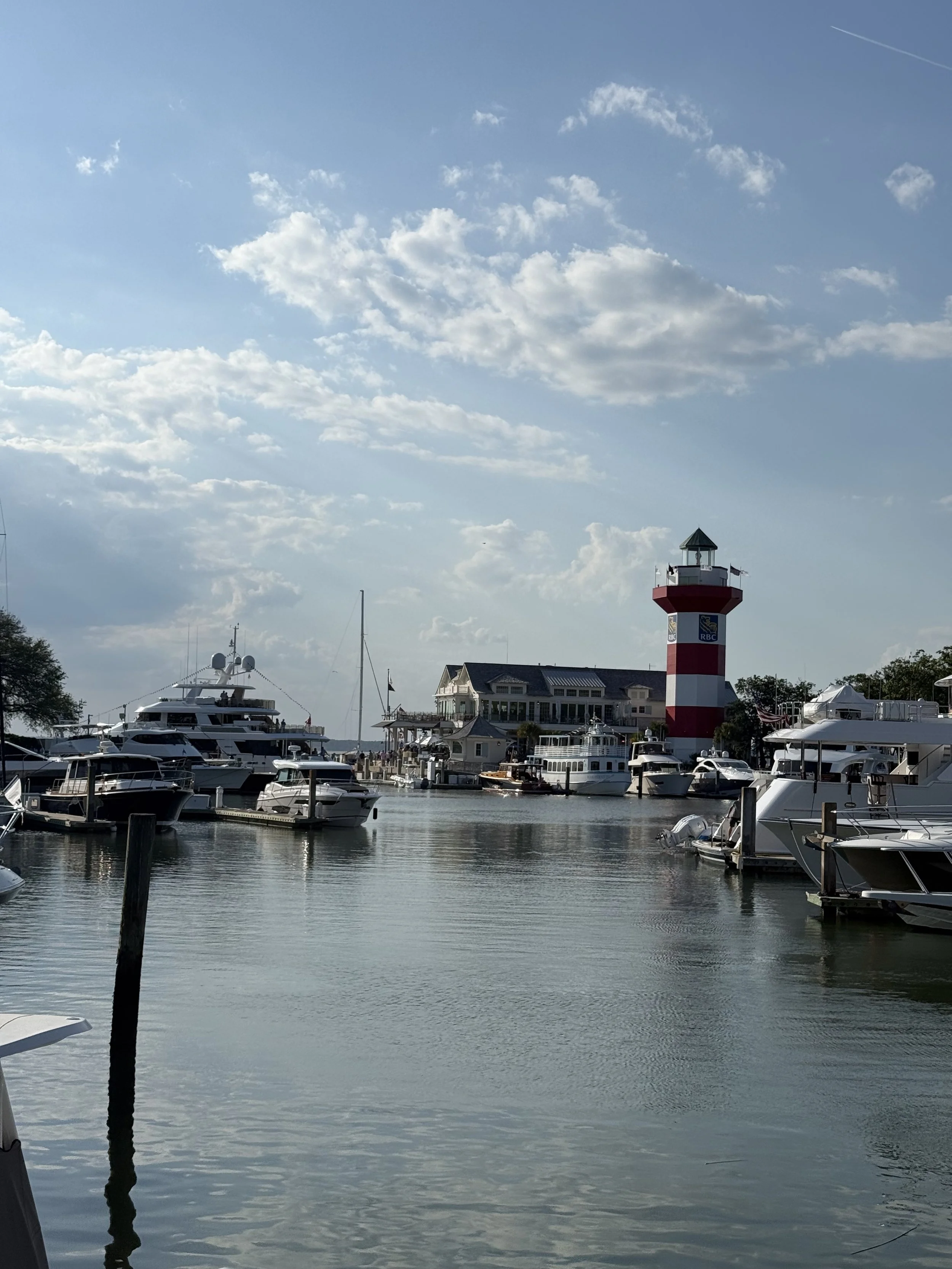
This year’s tournament leaned fully into those characteristics, particularly as the weather began to shape the week. Friday brought a steady coastal wind that moved through Harbour Town and exposed just how firm and fast the course had become. From the Lighthouse Club on 18, you could see it in the way approach shots struggled to hold the green and how quickly anything slightly offline would run out into trouble. Earlier in the day, watching tee shots on the opening hole and the drivable par four ninth offered a different perspective on the same challenge. Players had opportunities, but they had to be precise. There was very little room for indecision.
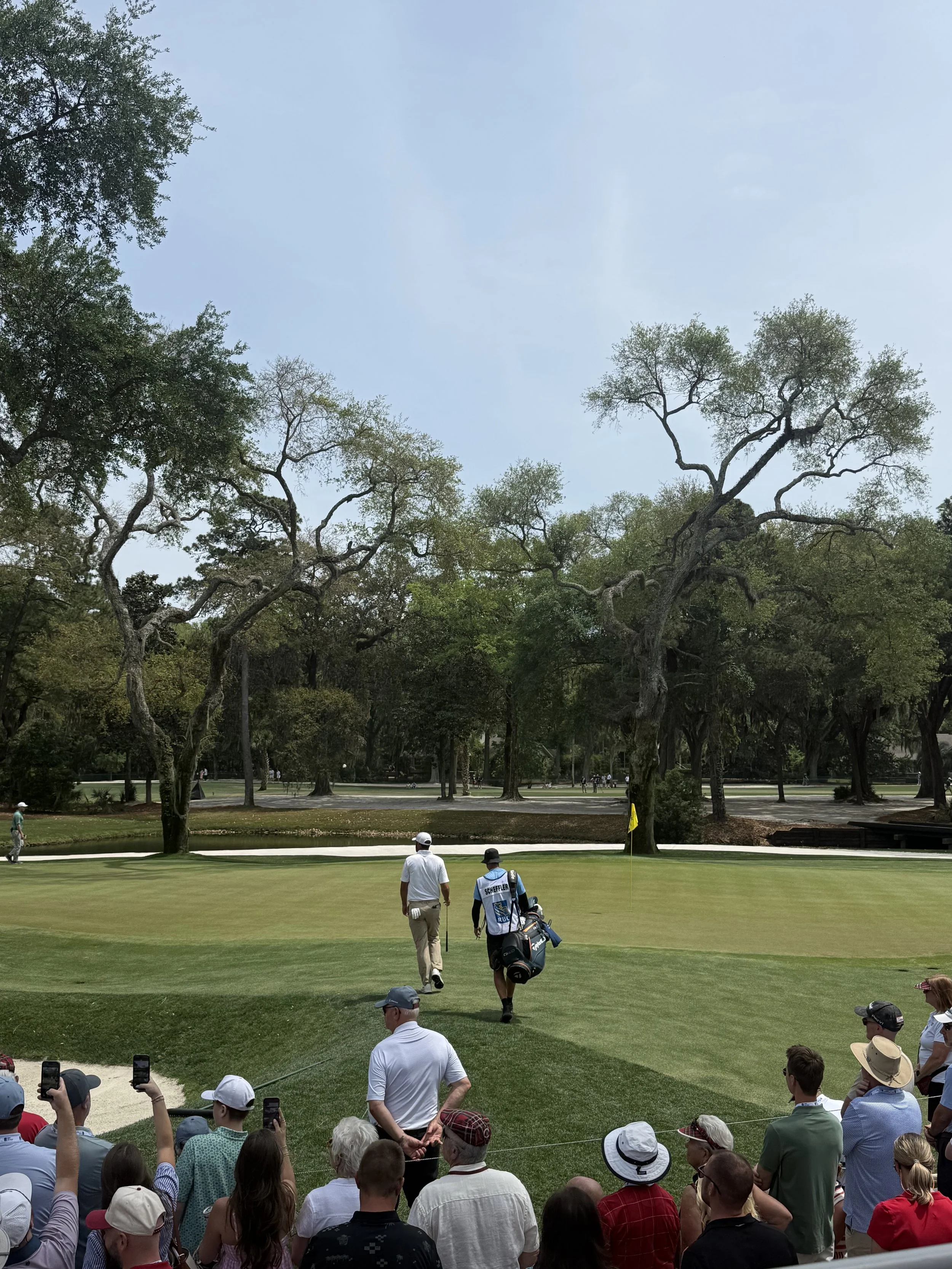
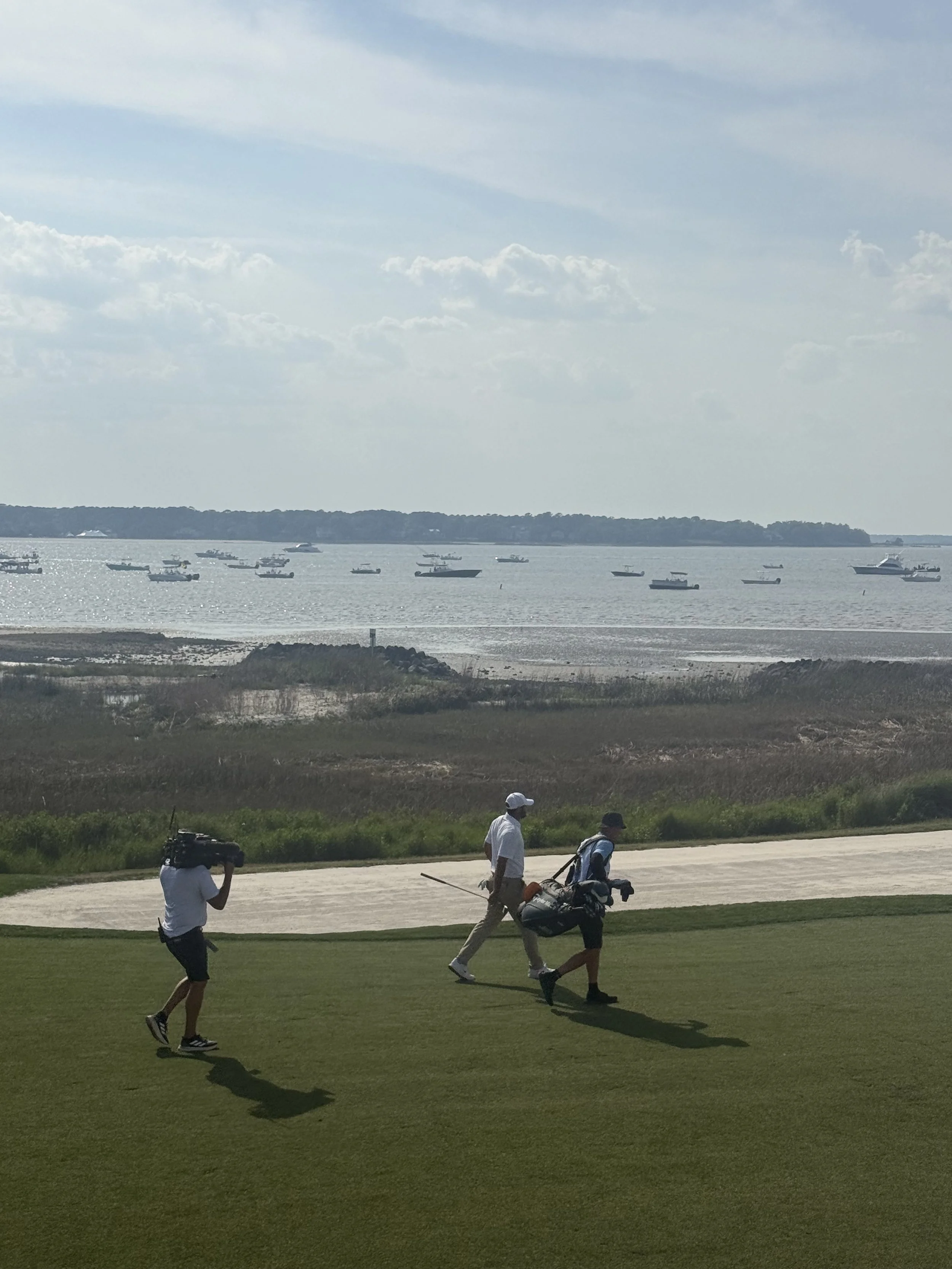
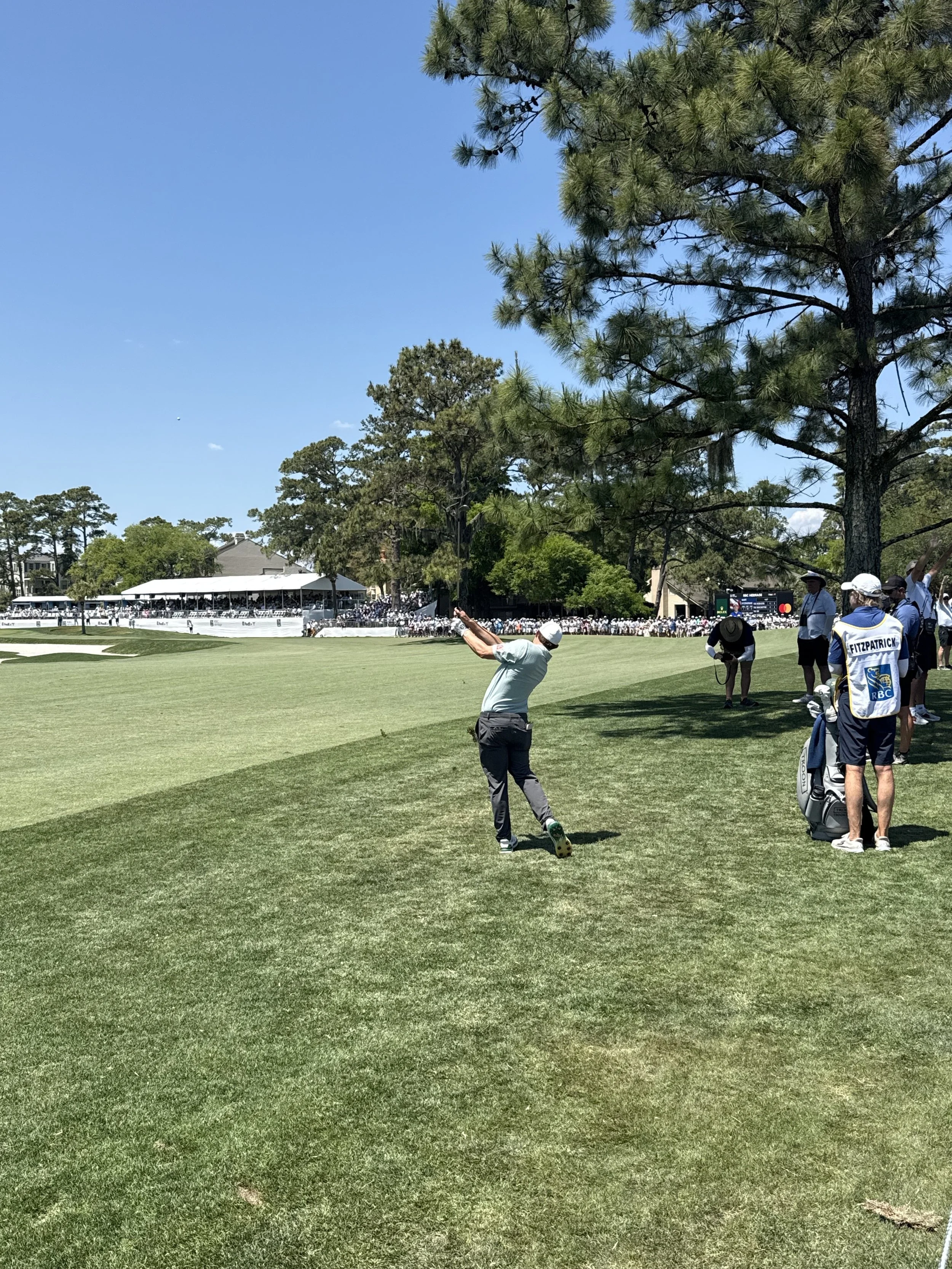
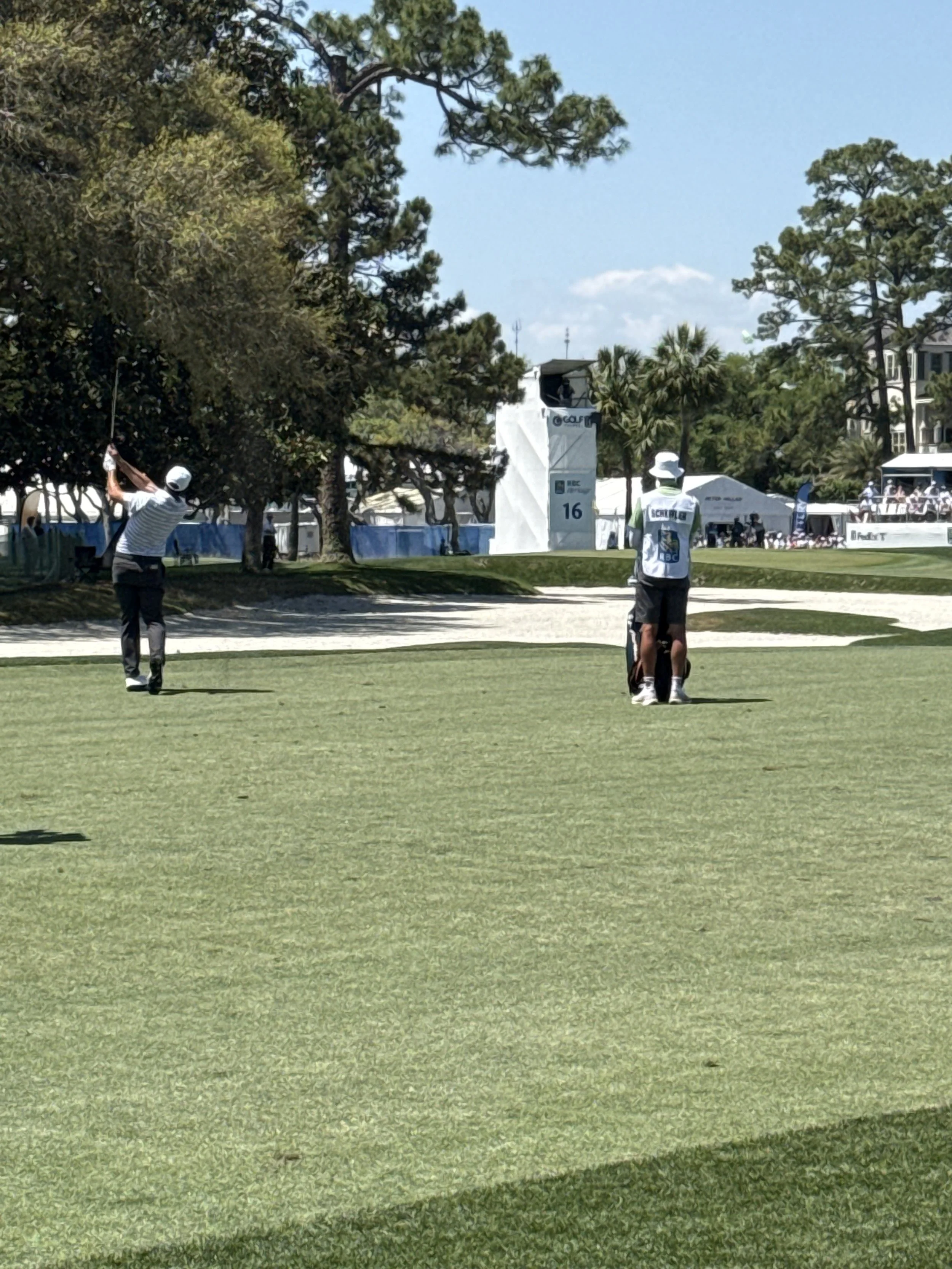
Om Friday we followed Scottie Scheffler over the closing stretch from fifteen through eighteen, and it was a reminder of how controlled his game has become. Even in the wind, there was very little excess movement. He had played alongside Matt Fitzpatrick through the first two rounds, a pairing that felt fitting for this place given that they are two of the recent winners and would eventually be paired together for the final round on Sunday. Everything looked measured, and everything had a purpose.
Saturday softened things just enough to change the tone without taking away from the test. The wind eased, the course became slightly more receptive, and scoring reflected it. Harbour Town still required the same discipline, but it allowed players to be a touch more aggressive when they found themselves in position. It felt like a brief window where the course opened up before tightening its grip again.
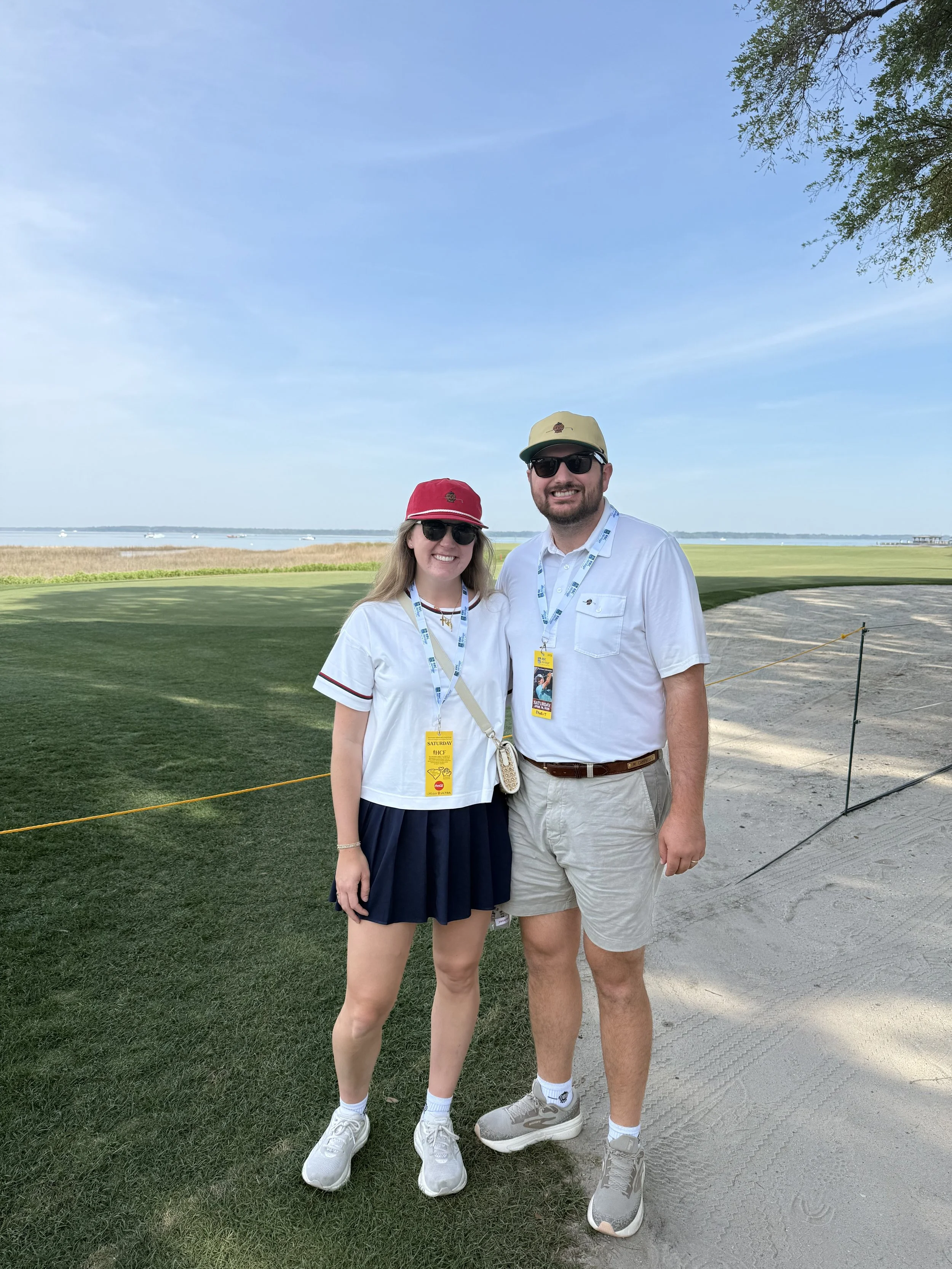
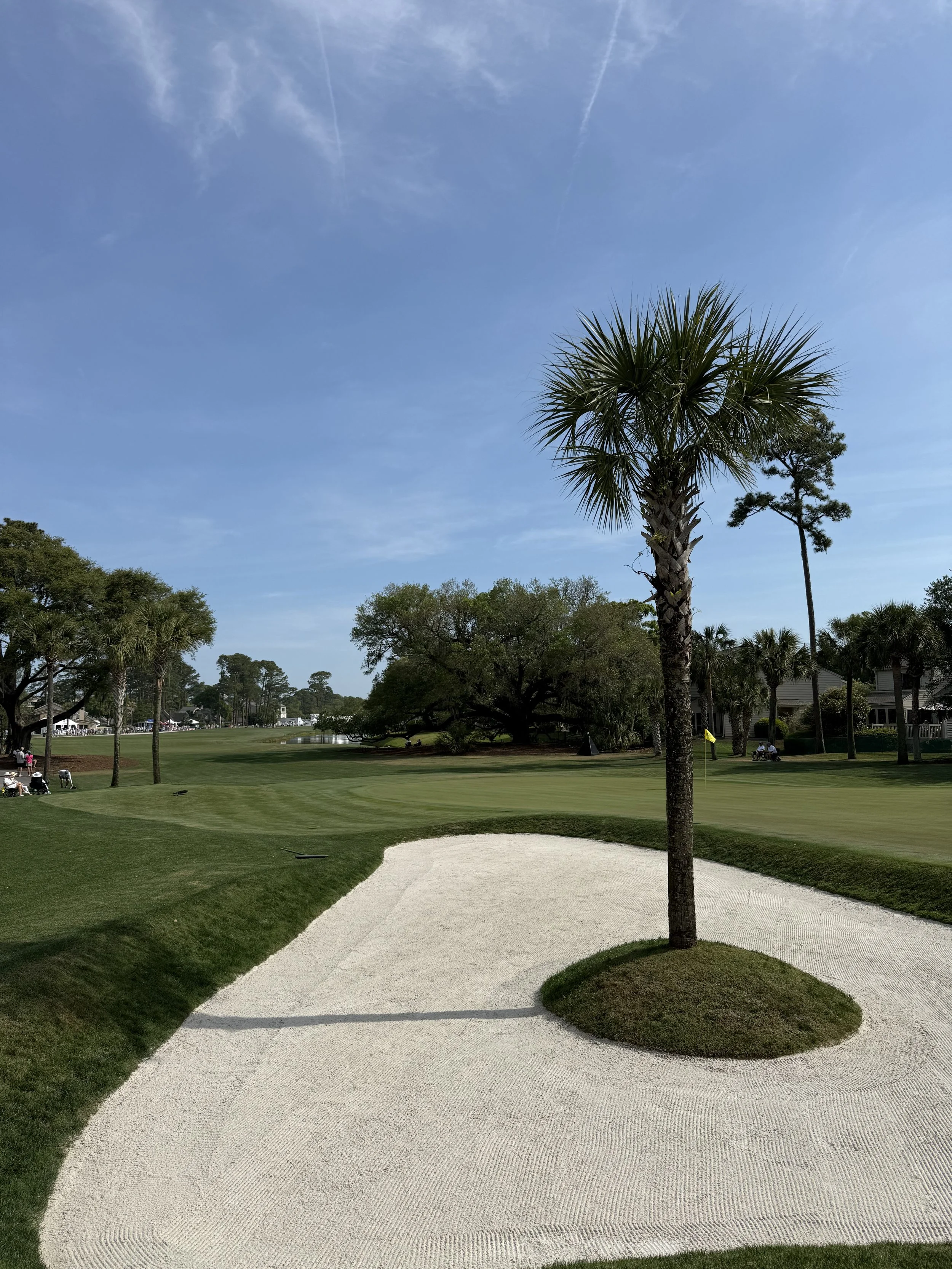
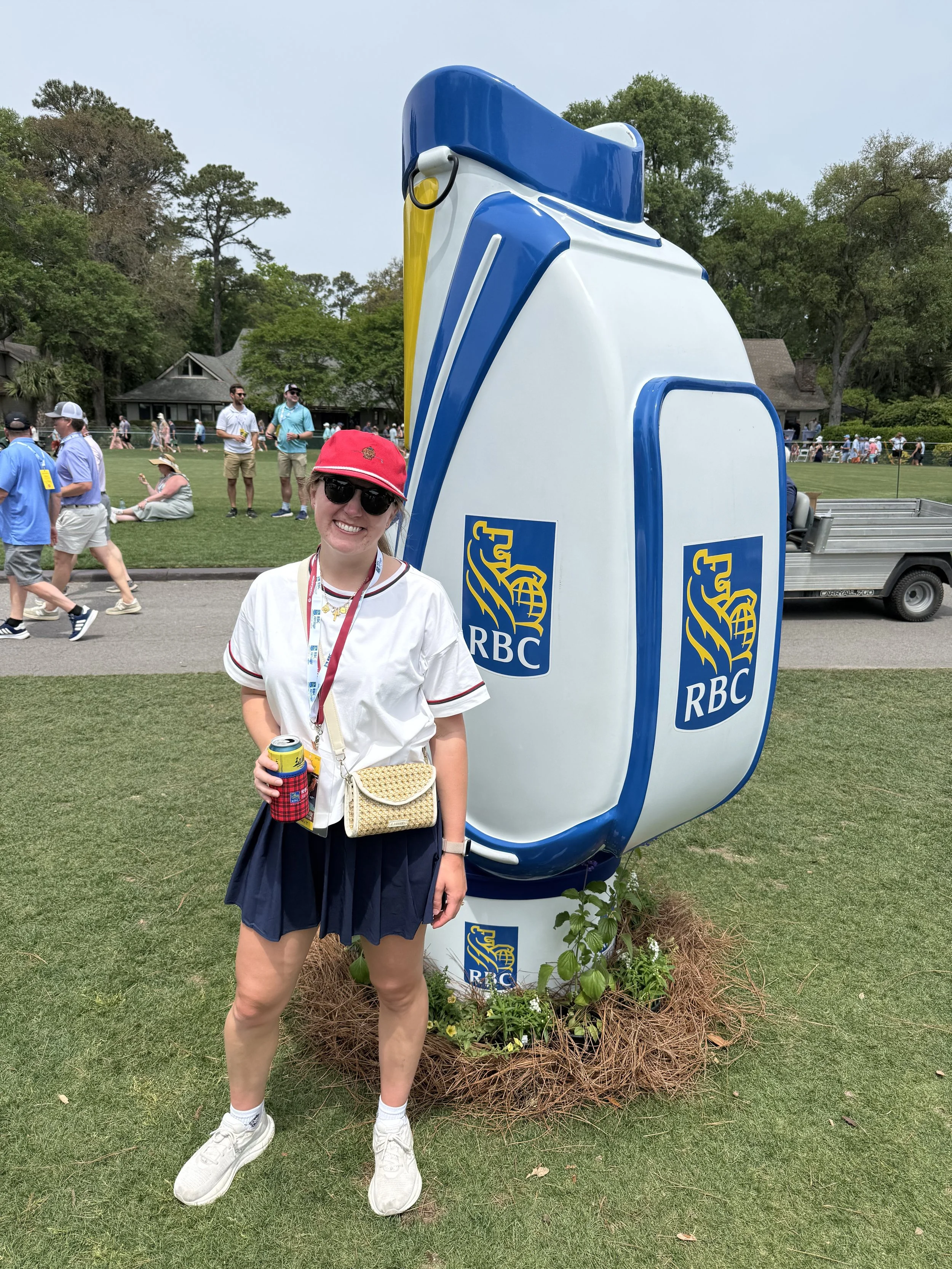
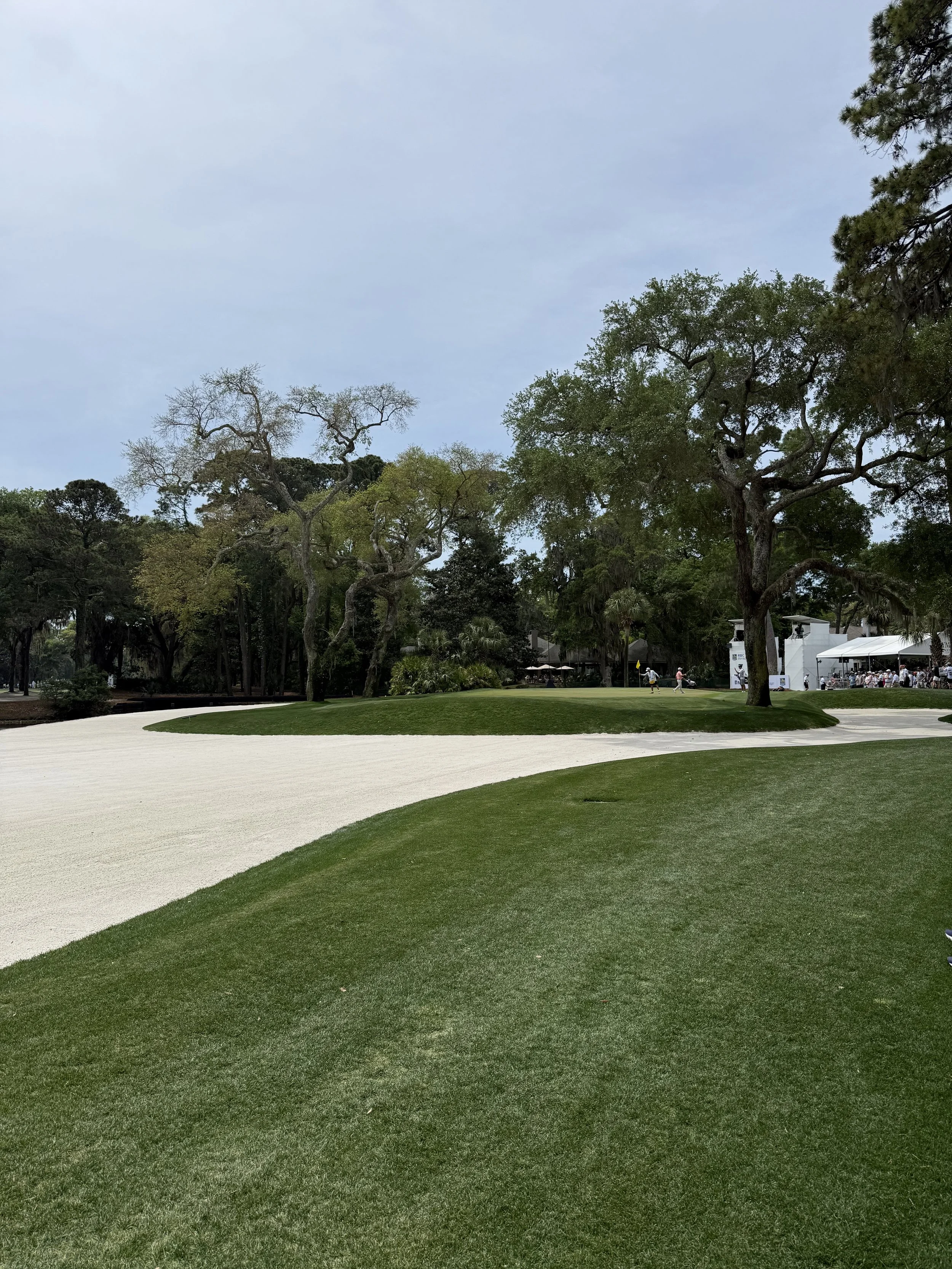
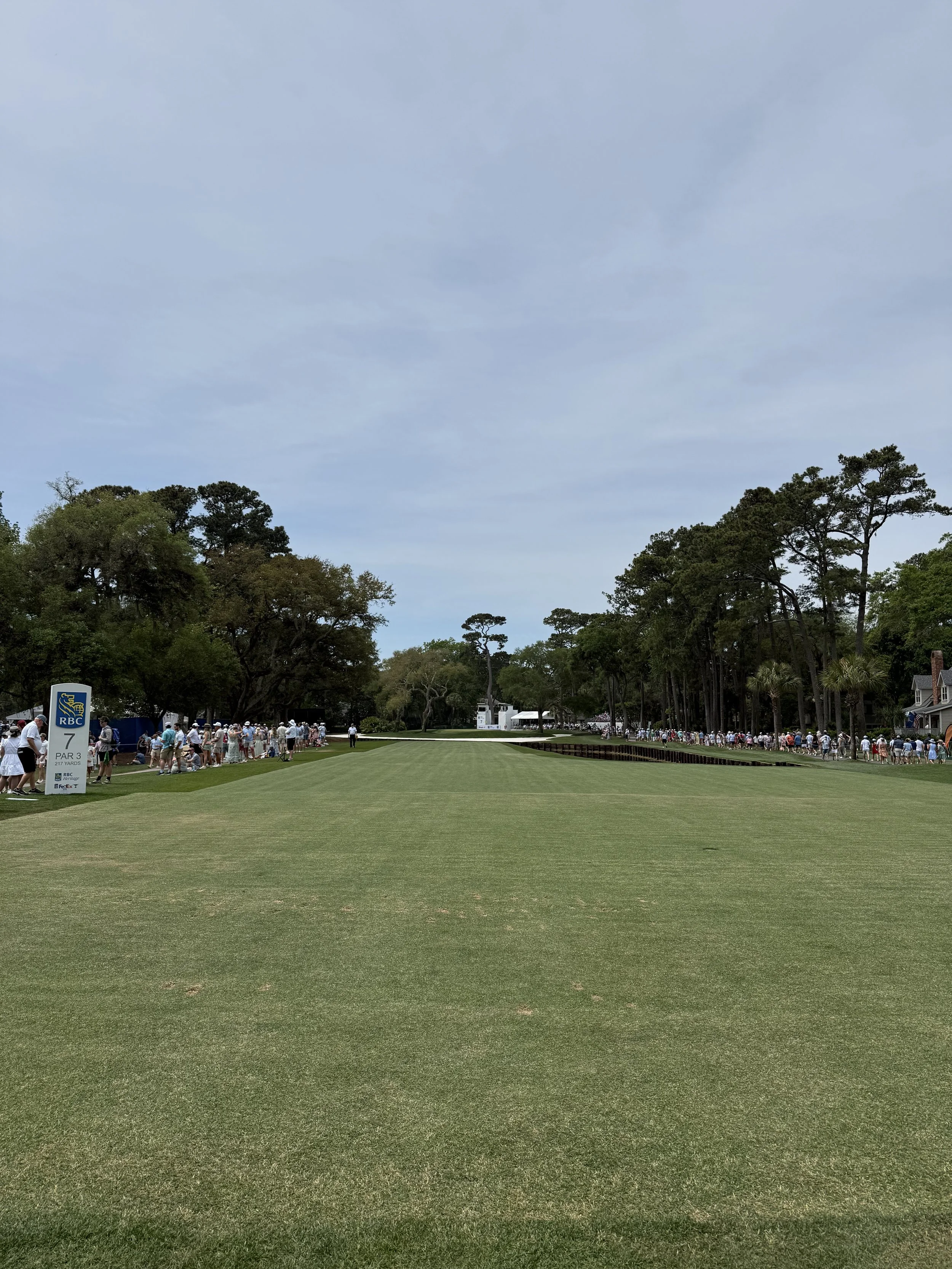
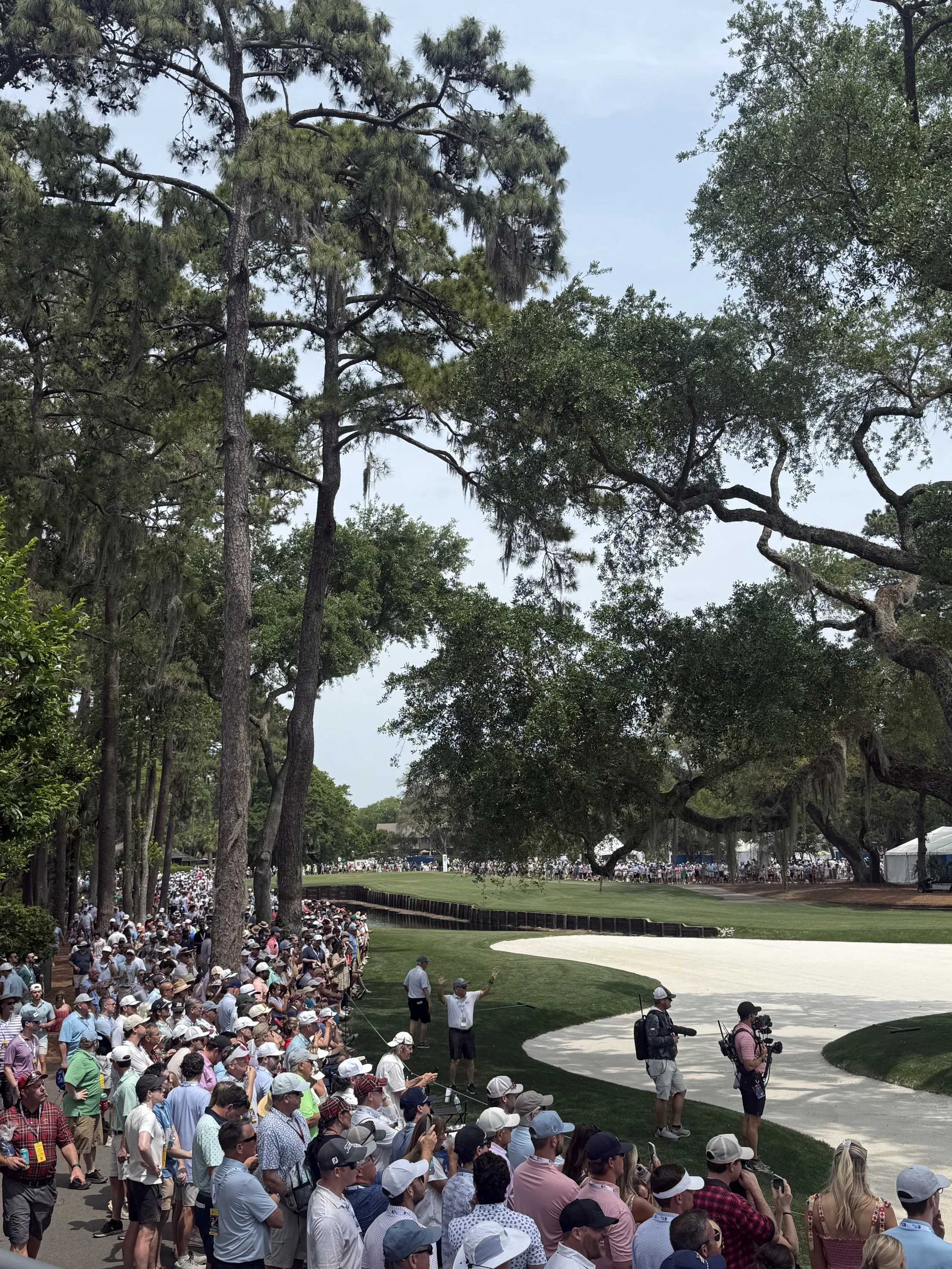
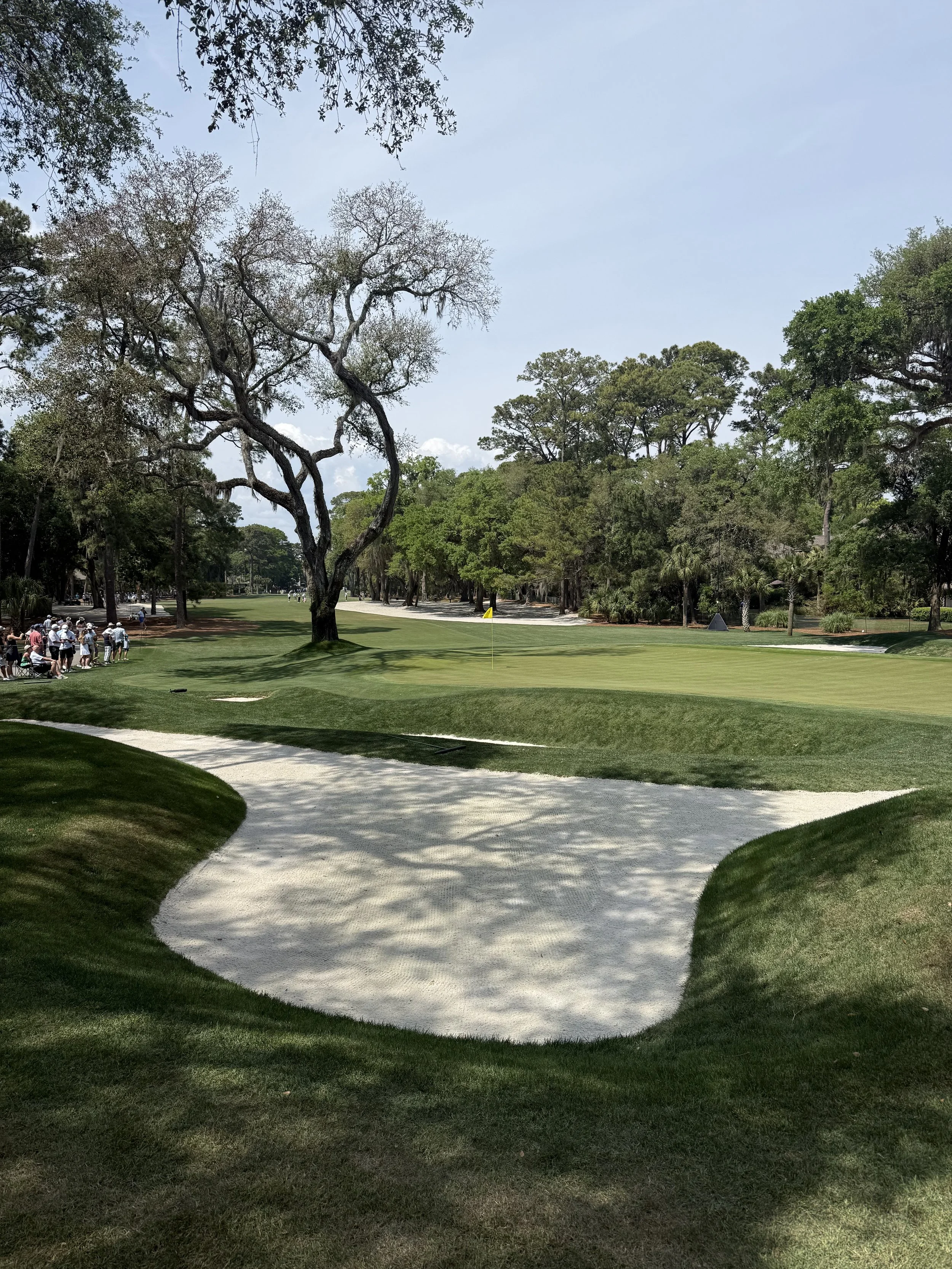
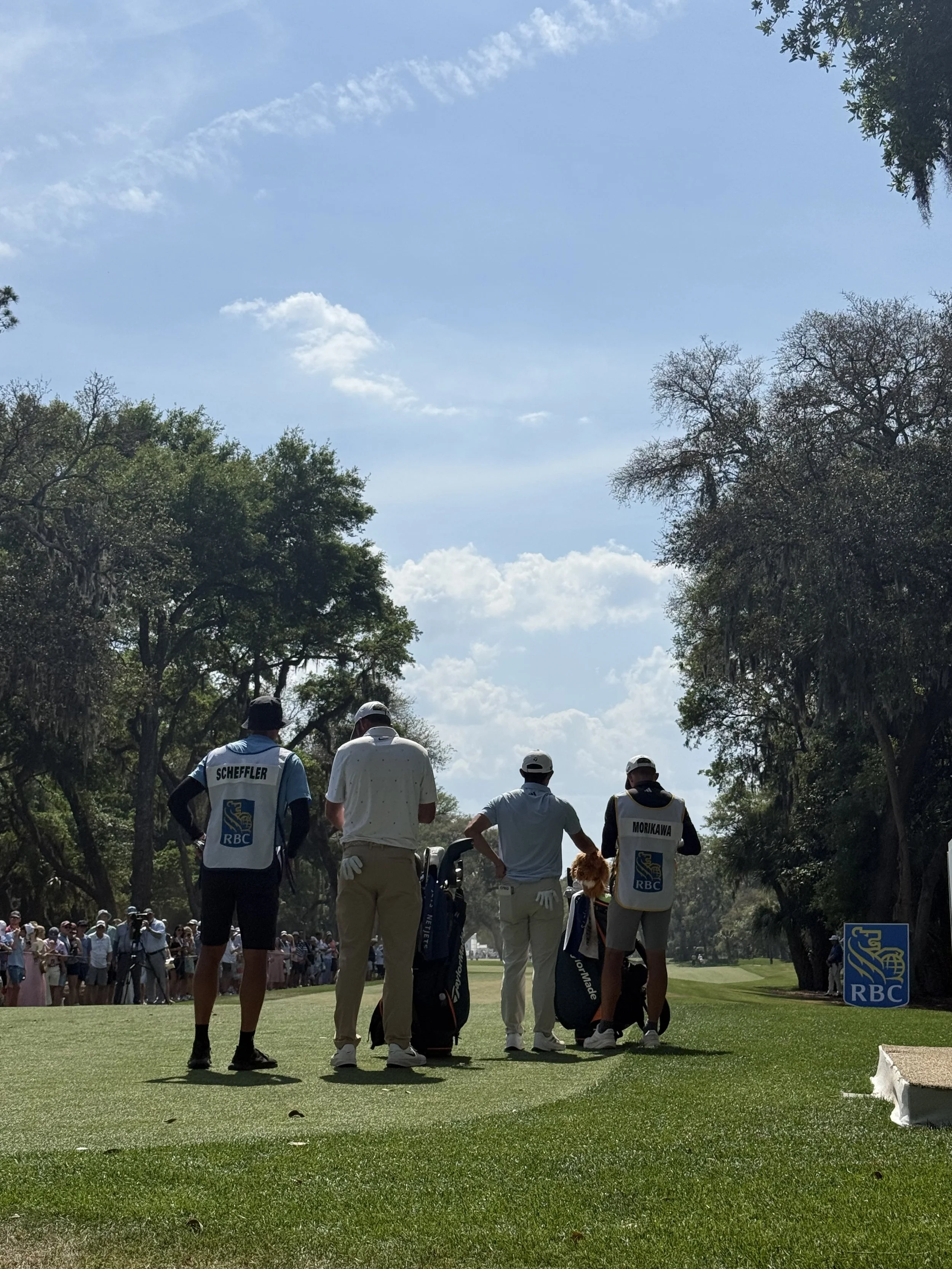
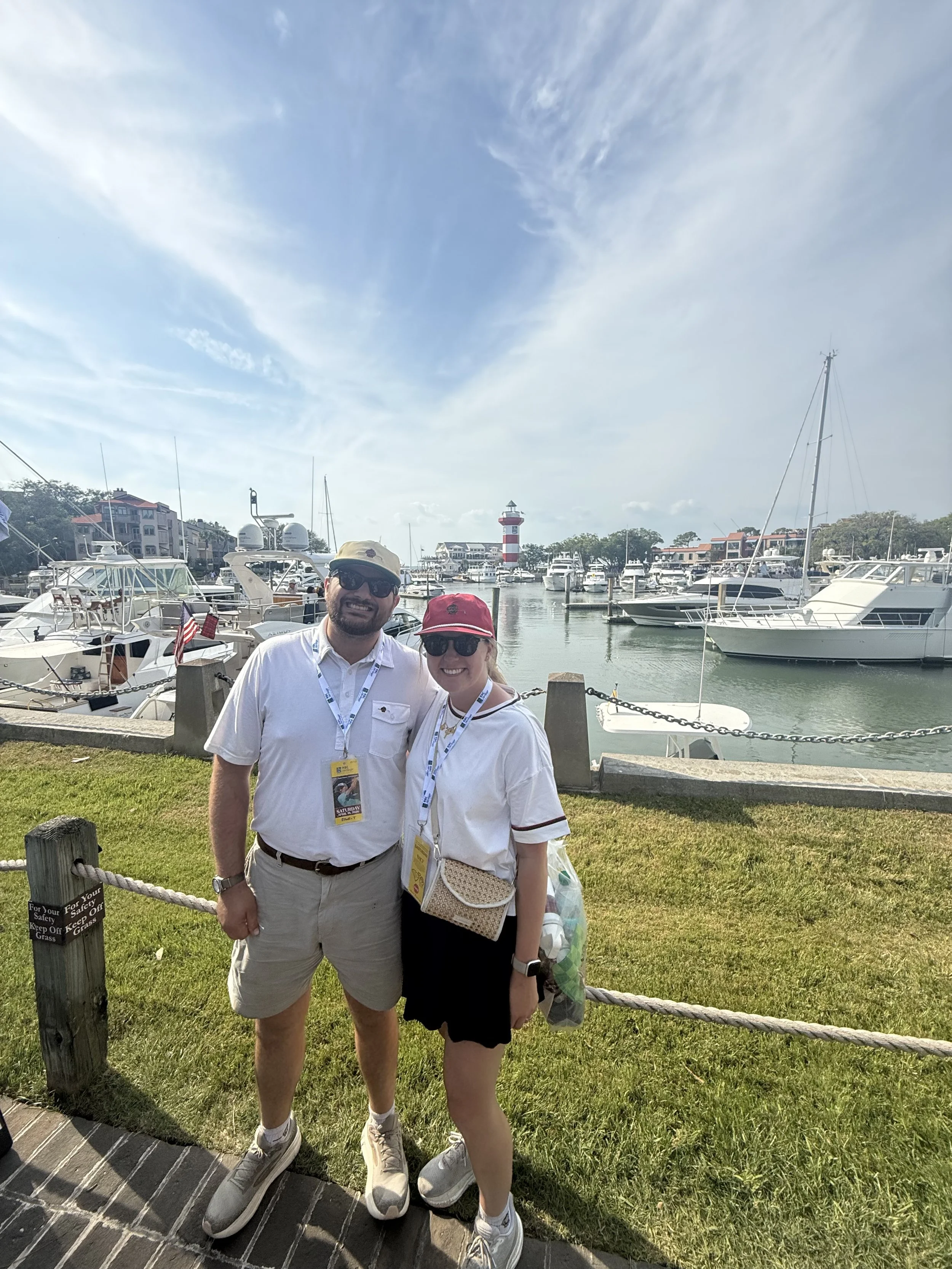
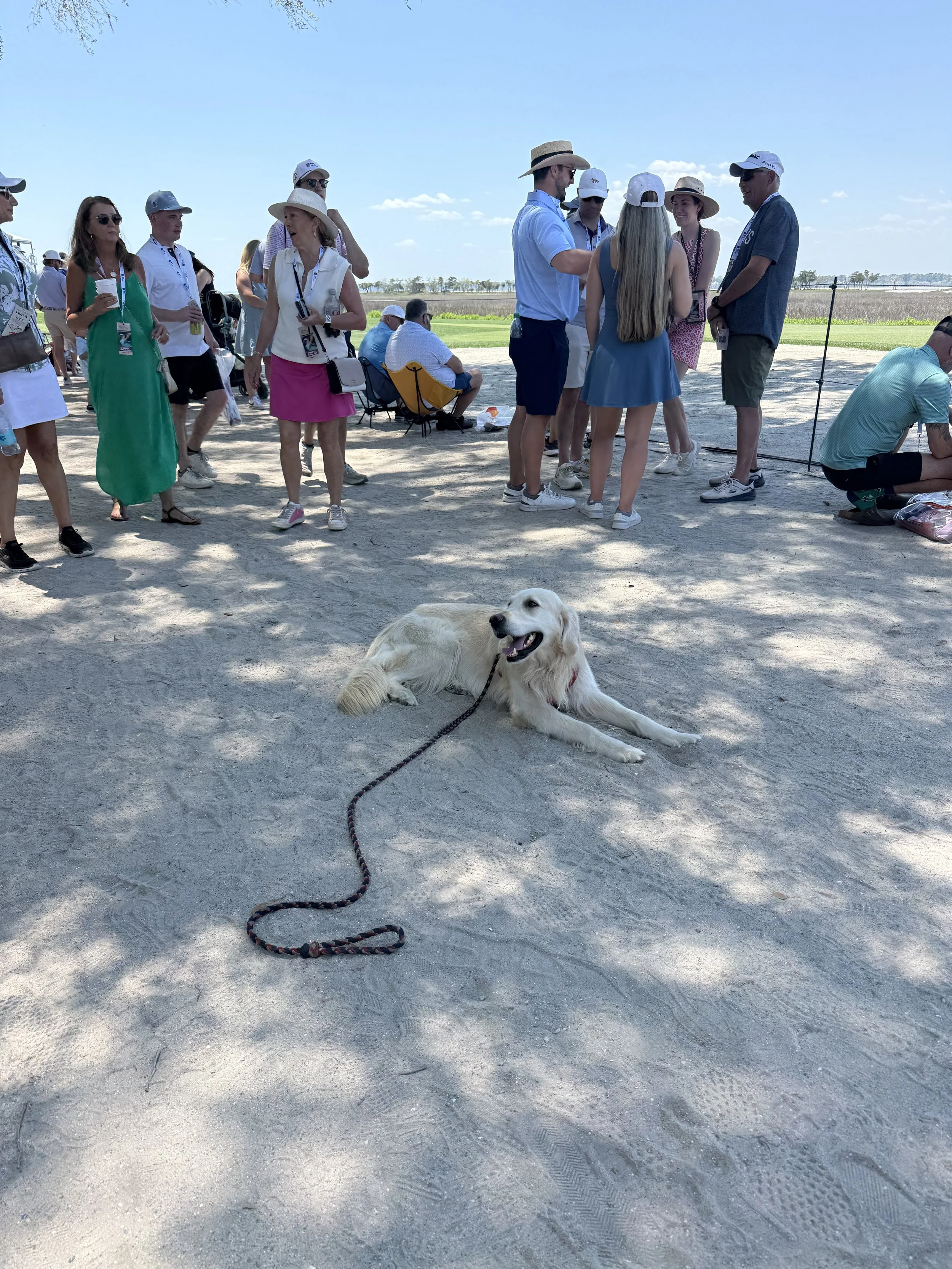
Hannah joined me for the Saturday round! We walked the front nine and spent some time watching various groups play through hole 7, which is a really neat par three. It is an island green with a sand surround. The front entrance to the green is guarded by two large oak trees, which came into action on several of the groups tee shots that we watched. We followed Scottie and Collin Morikawa for a few holes after they passed through 7, trying our best to stay ahead of the crowd that Scottie draws. The College of Charleston had a hospotality tent behind ten green that we watched a few groups roll through as well. To close out the day, we found the grandstand right of hole 18 and watched the final groups come through to set the stage for a Sunday showdown.
By Sunday, the wind had returned, and with it came the kind of finish that Harbour Town tends to produce. Scheffler started the day three shots back, never forcing the issue but steadily working his way into contention. There is a patience required here that not every player embraces, but it suits him. Shot by shot, he closed the gap, leaning on control rather than chasing something heroic. Coming up the eighteenth, with the lighthouse framing the green and the wind again a factor, he had a chance to force a playoff. It felt entirely in line with the week and with the course itself, where nothing is given and everything has to be earned. Scottie and Matt ended up in a one hole playoff where Matt closed out the tournament with a birdie to win for the second time at the RBC Heritage.
Harbour Town ultimately feels like a throwback in the best sense. It resists the modern urge to stretch, to overwhelm, or to chase spectacle, and instead leans into the kind of golf that asks for restraint and imagination. Walking the property over a couple of days as the conditions shifted, there is a familiarity to it that feels almost nostalgic. The sightlines, the scale, and the way the course sits within the landscape all call back to an earlier era of the game. That sense carries through the tournament itself, from the pace of play to the tartan jacket waiting on Sunday afternoon. It is not trying to reinvent anything. It simply reminds you why this version of golf has always worked.
If you made it this far, use our discount code for 20% off a purchase in our pro shop!
Code: HERITAGE
Friday’s Gallery
Saturday’s Gallery