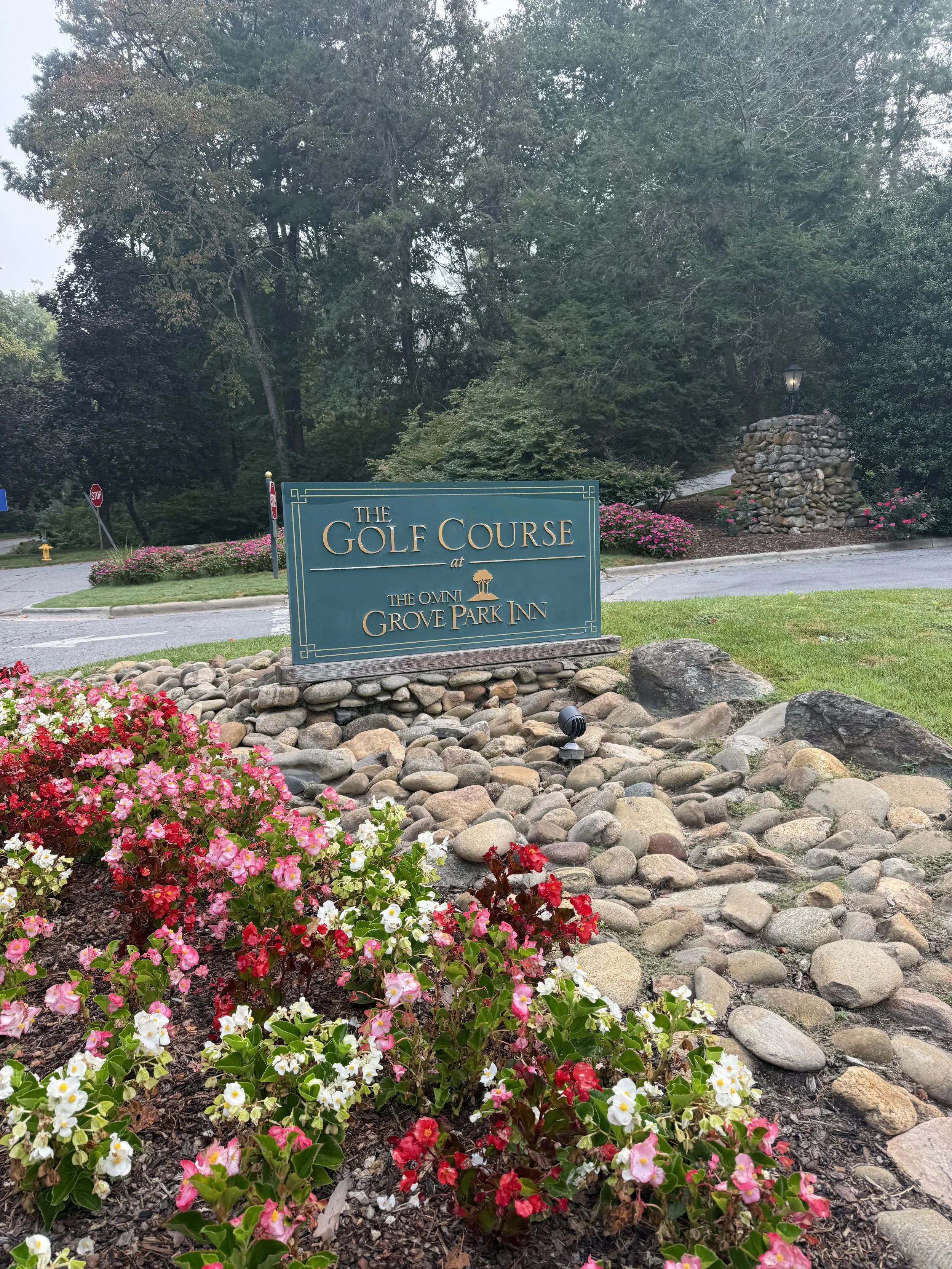
Grove Park Golf Course - Asheville, NC
In search of cooler weather, Hannah and I, along with our friends Erin and Tyler, headed north from Charleston, South Carolina, to a cabin we rented just outside of Burnsville, North Carolina, for Labor Day weekend. Wellington and their Dachshund, Gus, came along for the trip, and we spent the weekend exploring Western North Carolina through hikes, restaurants, and plenty of relaxation. Our cabin had a beautiful view of the Black Mountain range, which includes Mount Mitchell, the highest point east of the Mississippi River.
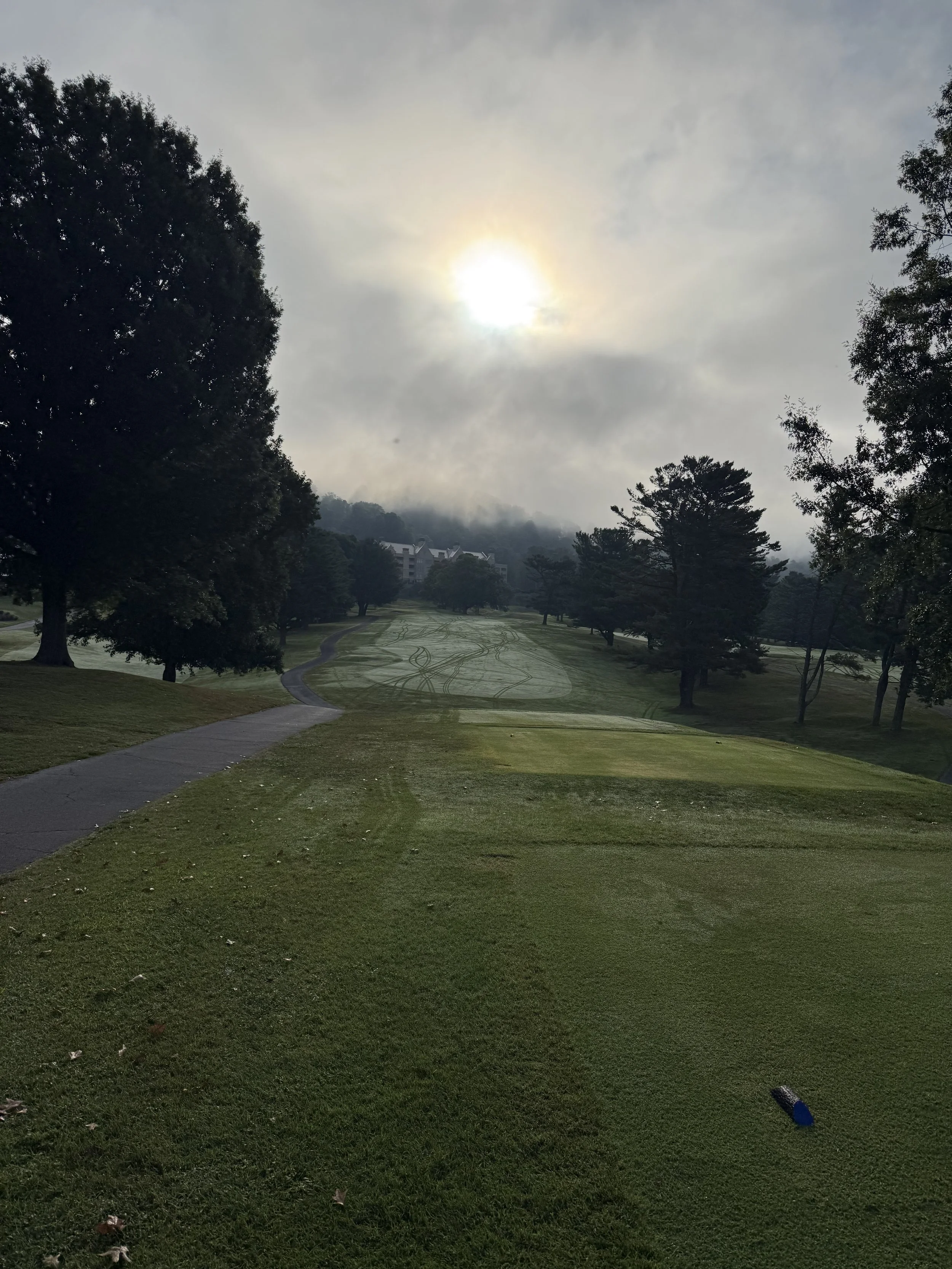
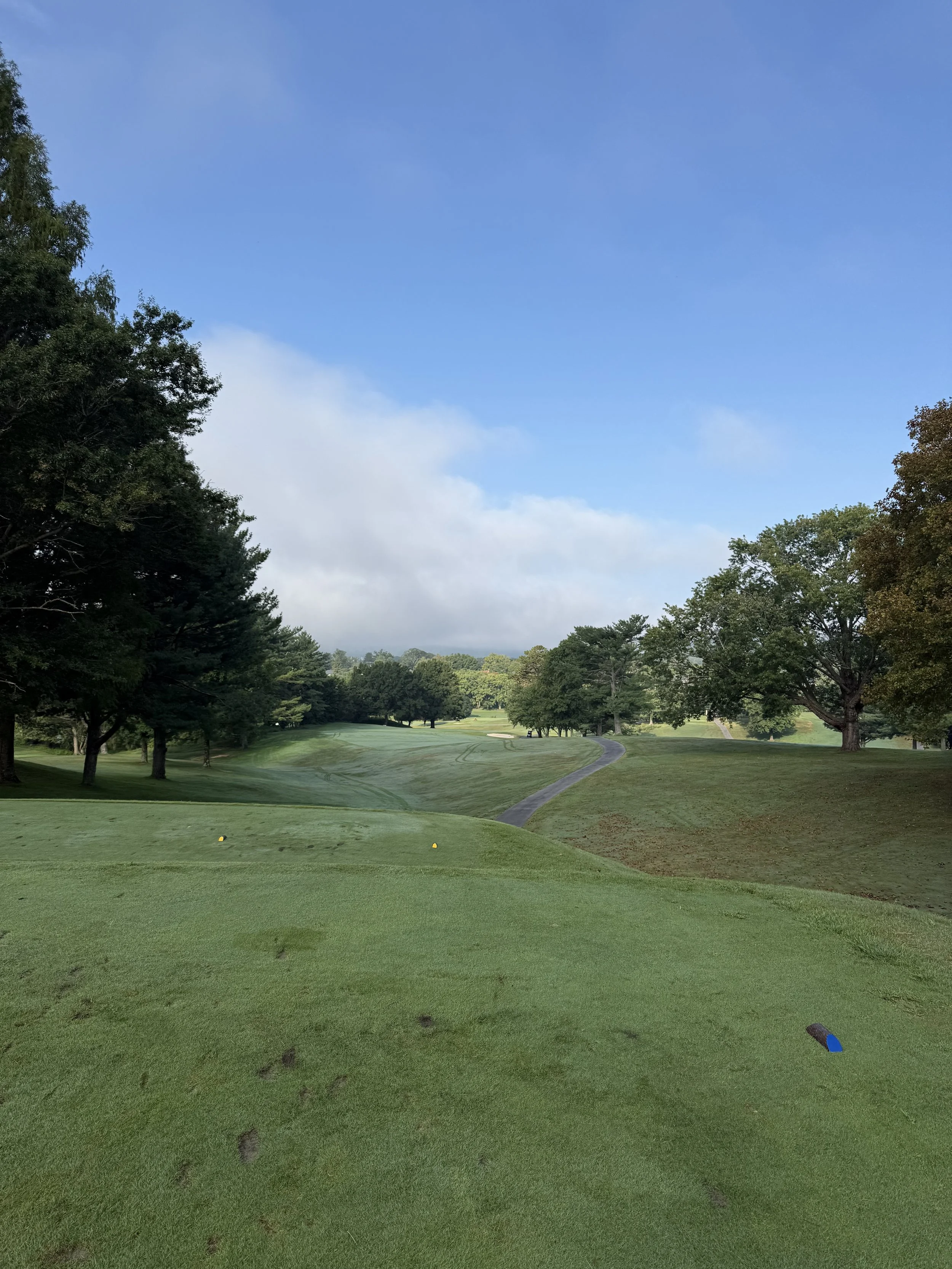
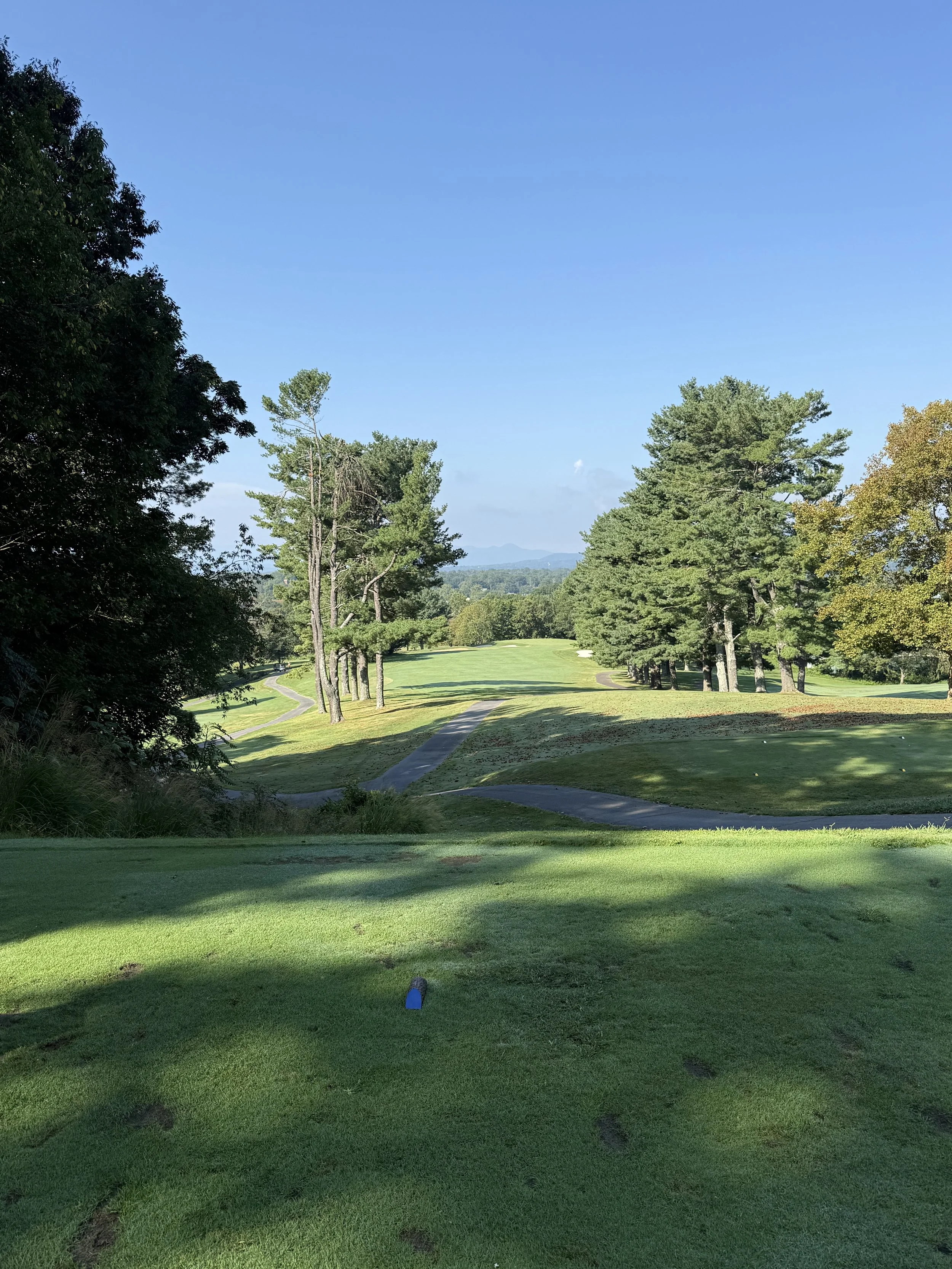
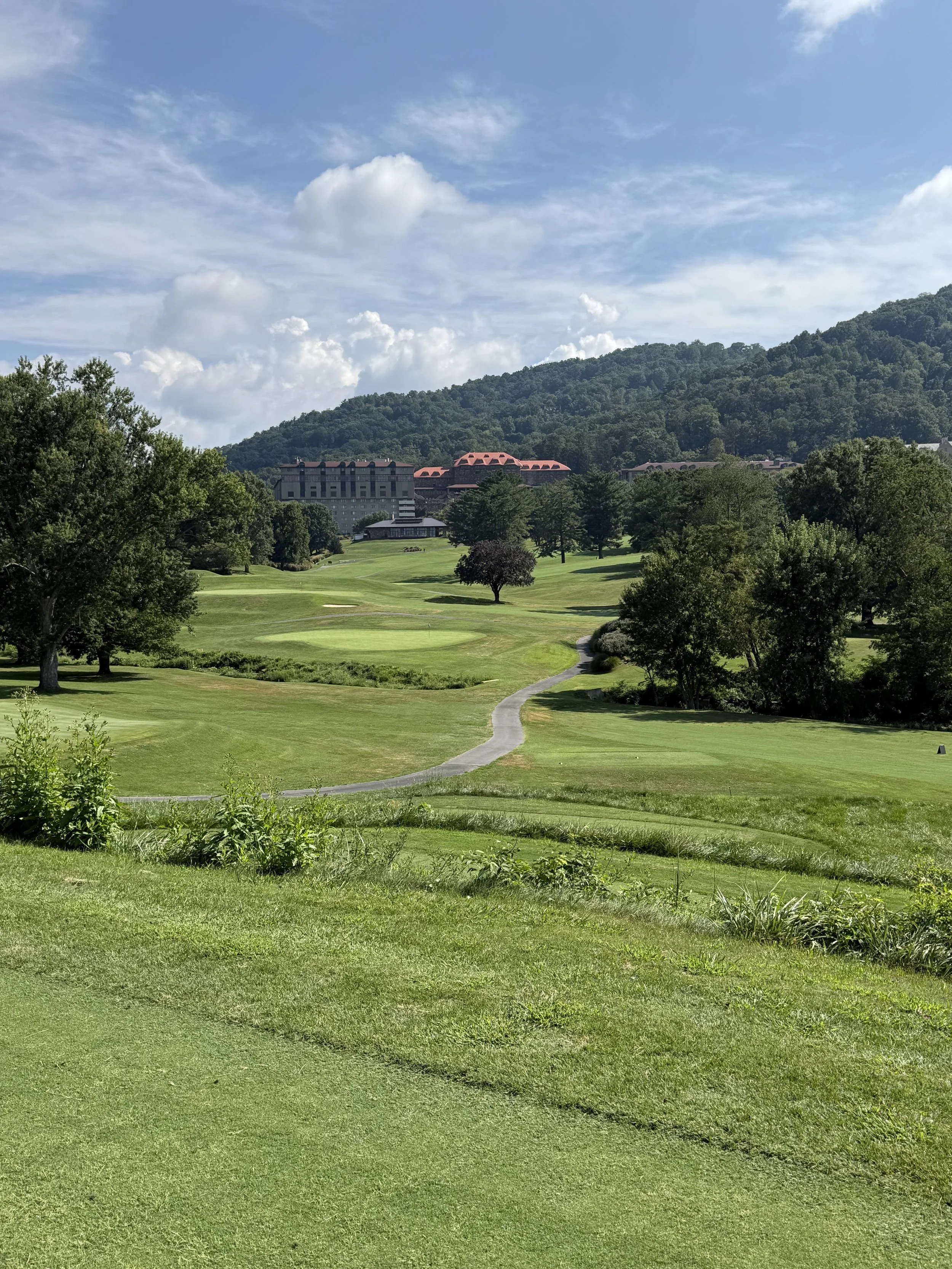
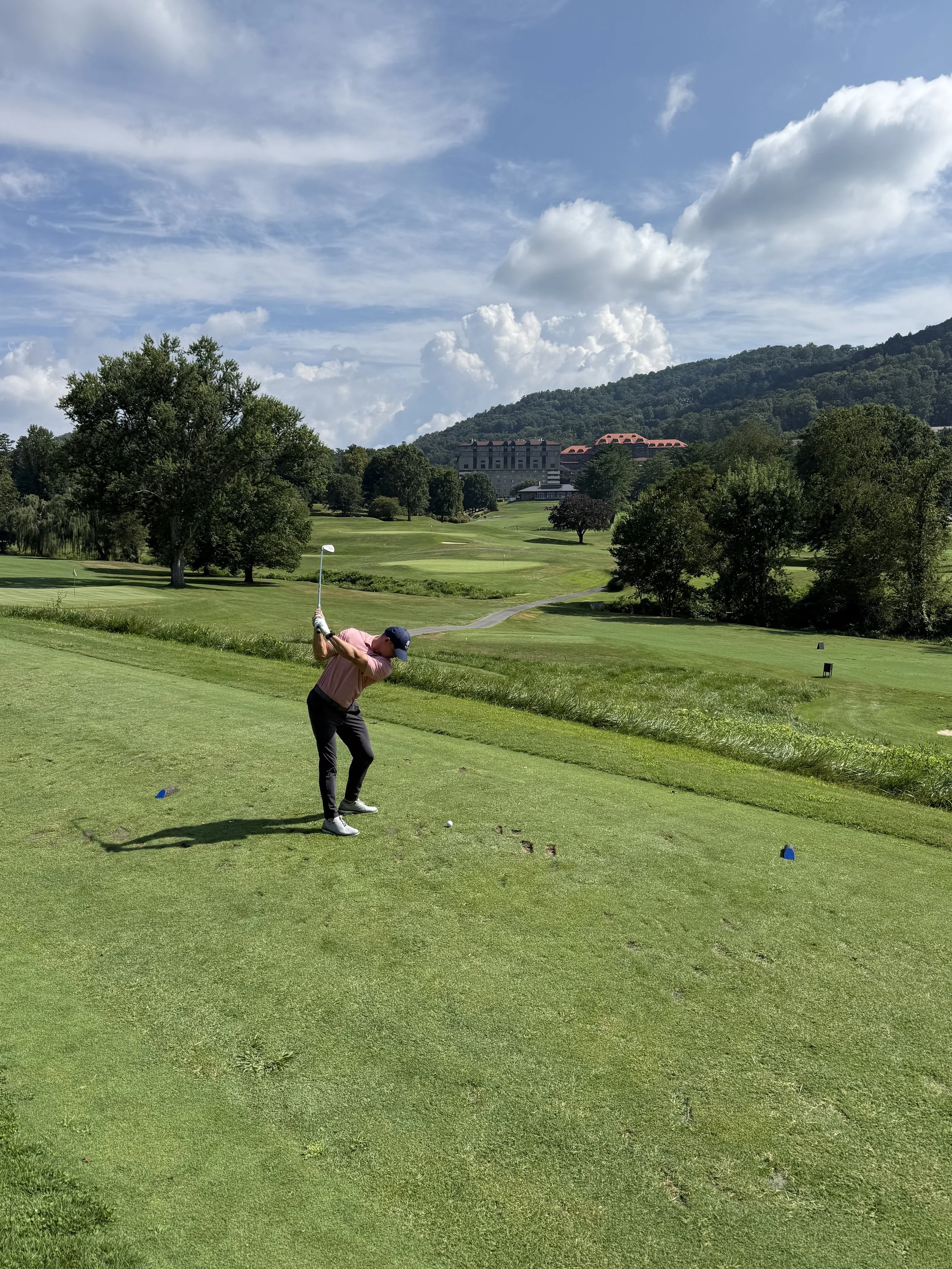
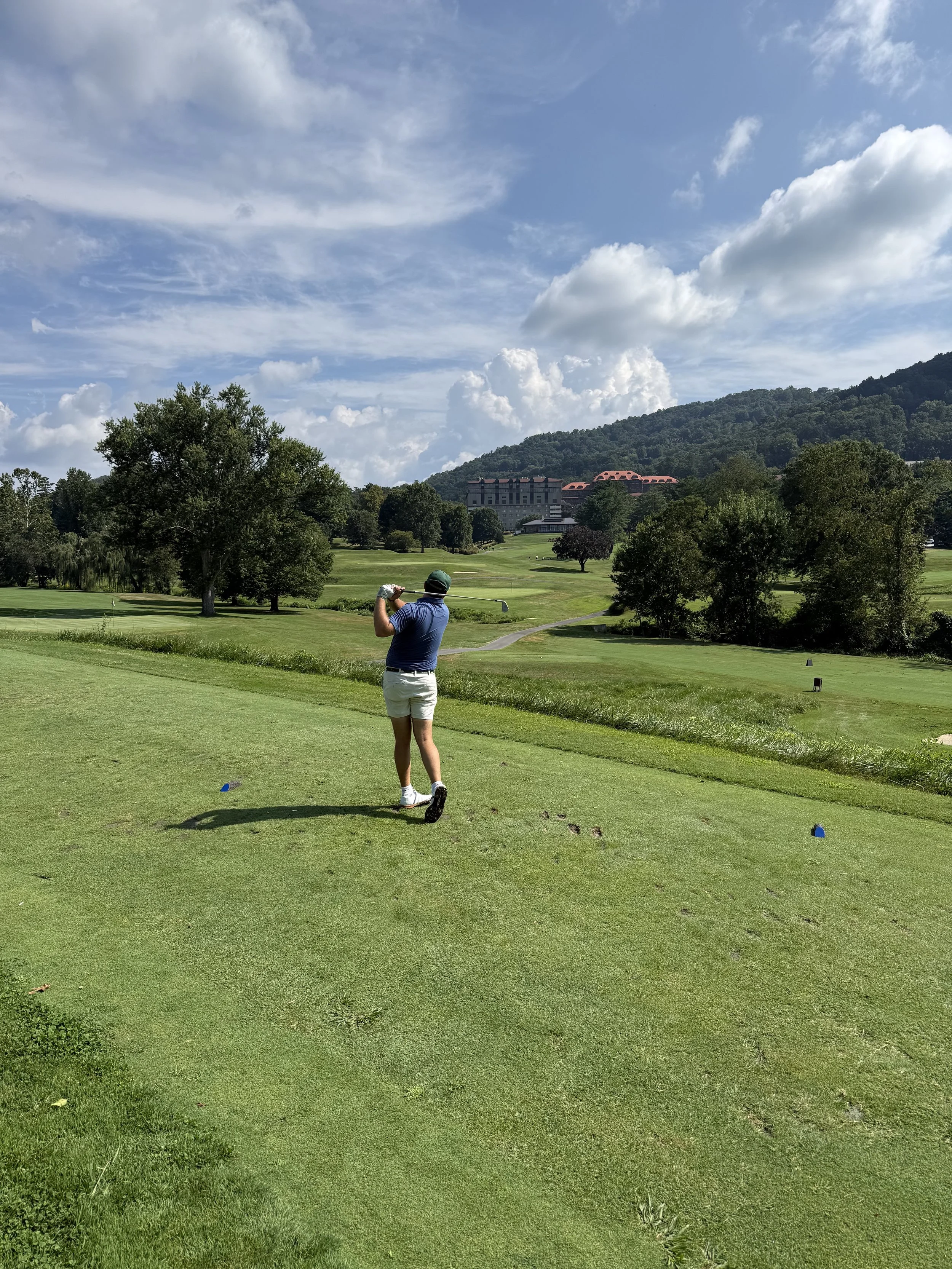
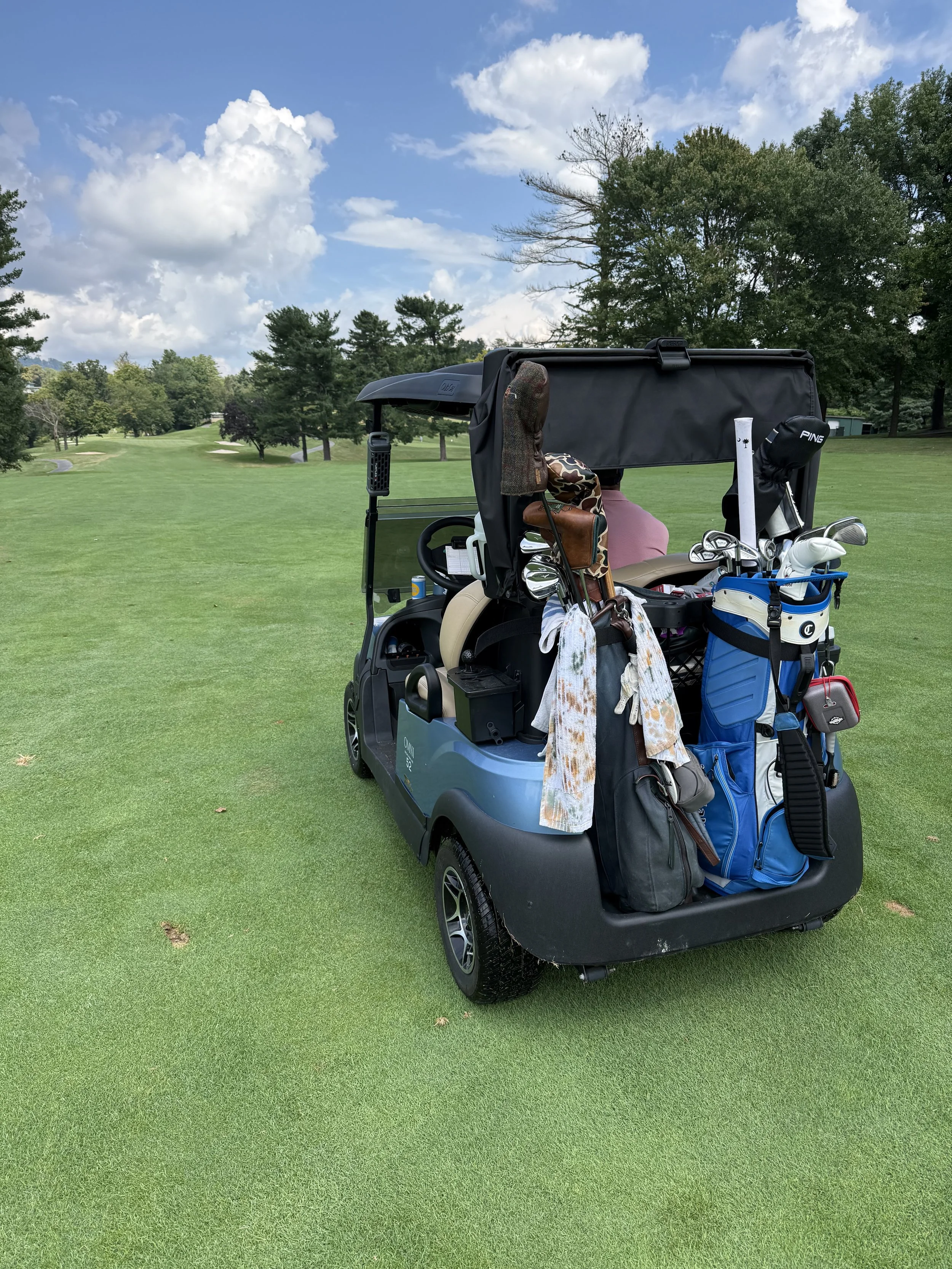
On Sunday morning, Tyler and I ventured south to Asheville to play the Grove Park Golf Course, part of the historic Omni Grove Park Inn Resort. We caught it on about as good of a morning as we could have asked for. The weather was cool and comfortable, the course was in excellent condition, and the mountains surrounding Asheville provided a great setting for a morning of golf.
Grove Park is not a long golf course by modern standards, and it does not pretend to be. What quickly became apparent during our round was that length has very little to do with what makes the course difficult. The challenge really begins once you start approaching the greens.
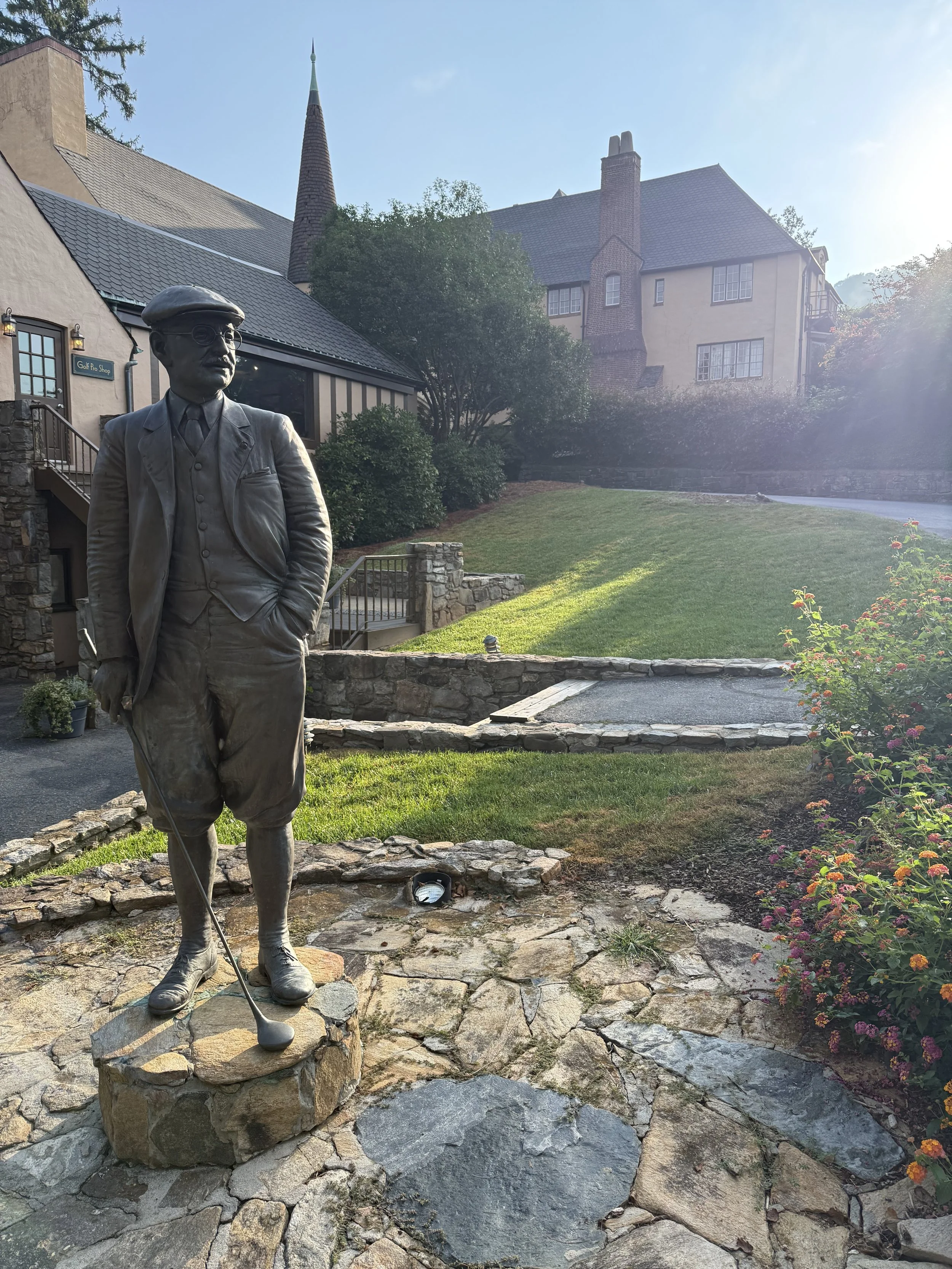
That should probably come as no surprise considering the name most closely associated with the course: Donald Ross.
Ross entered the story at Grove Park in the 1920s, with the course associated with his work dating to 1926. By then, Ross had already established himself as one of the most important architects in American golf, with North Carolina becoming home to some of his most recognizable work. While Pinehurst is naturally where most people associate Ross with the state, the terrain he encountered in Asheville was completely different.
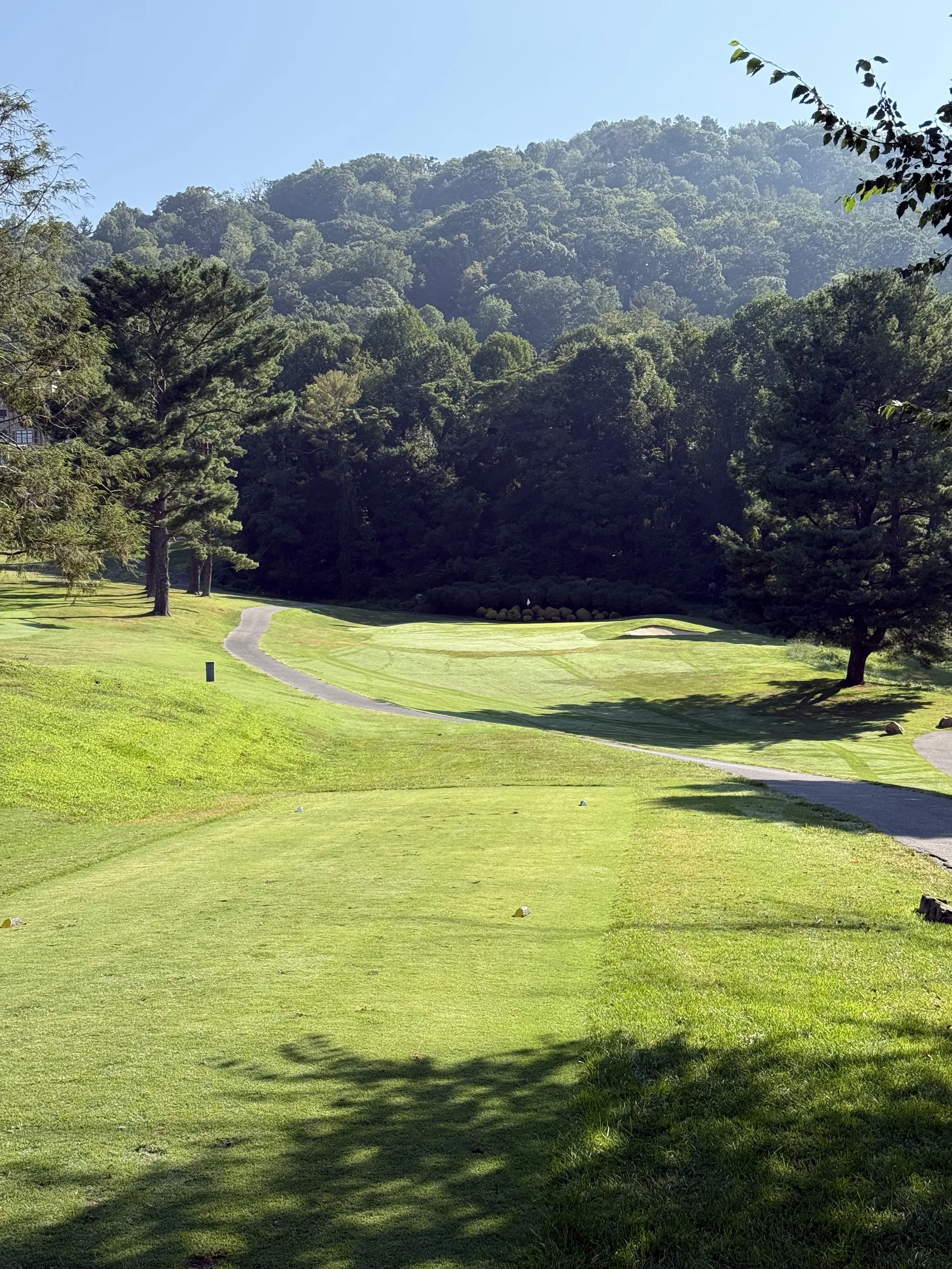
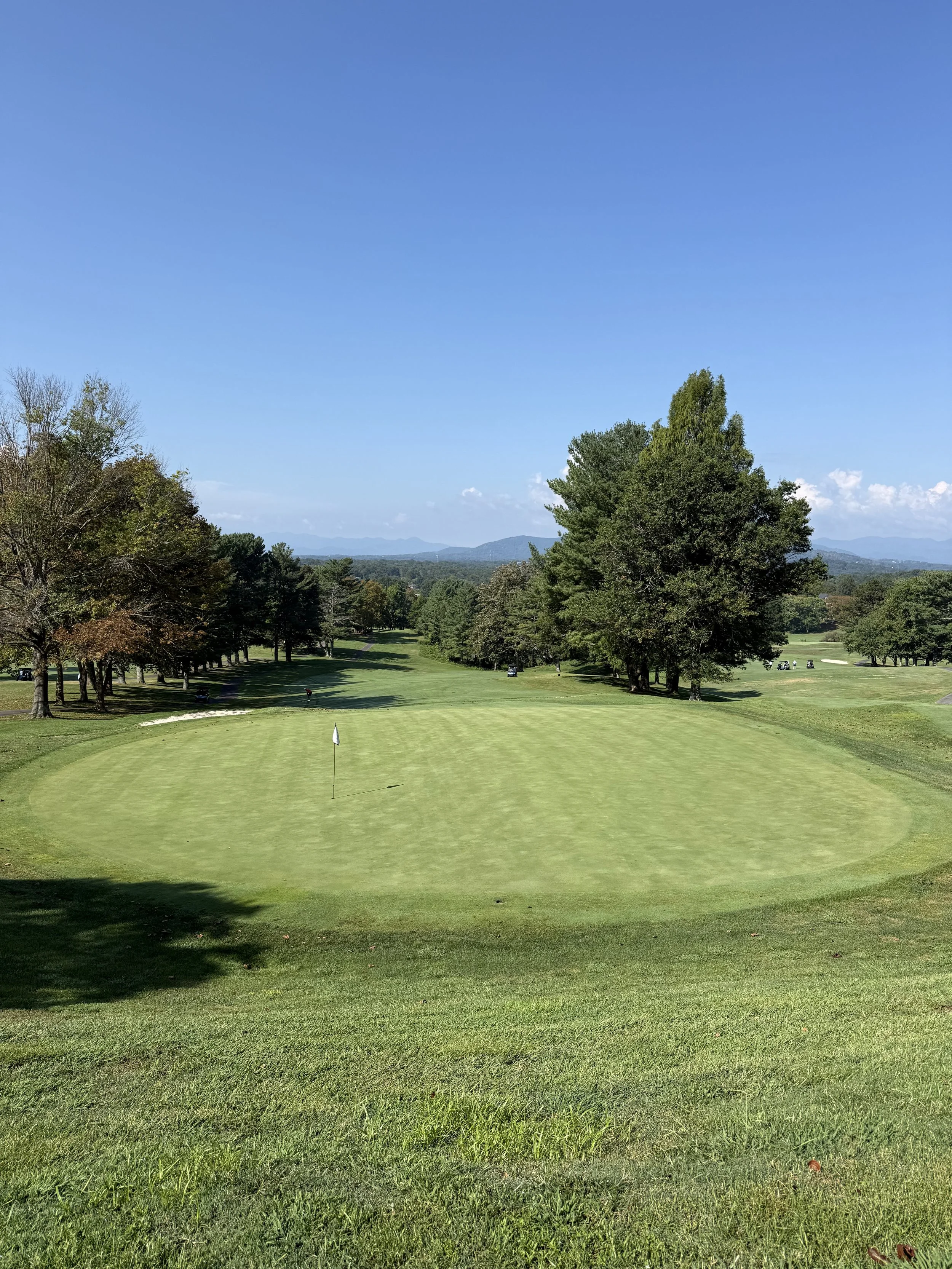
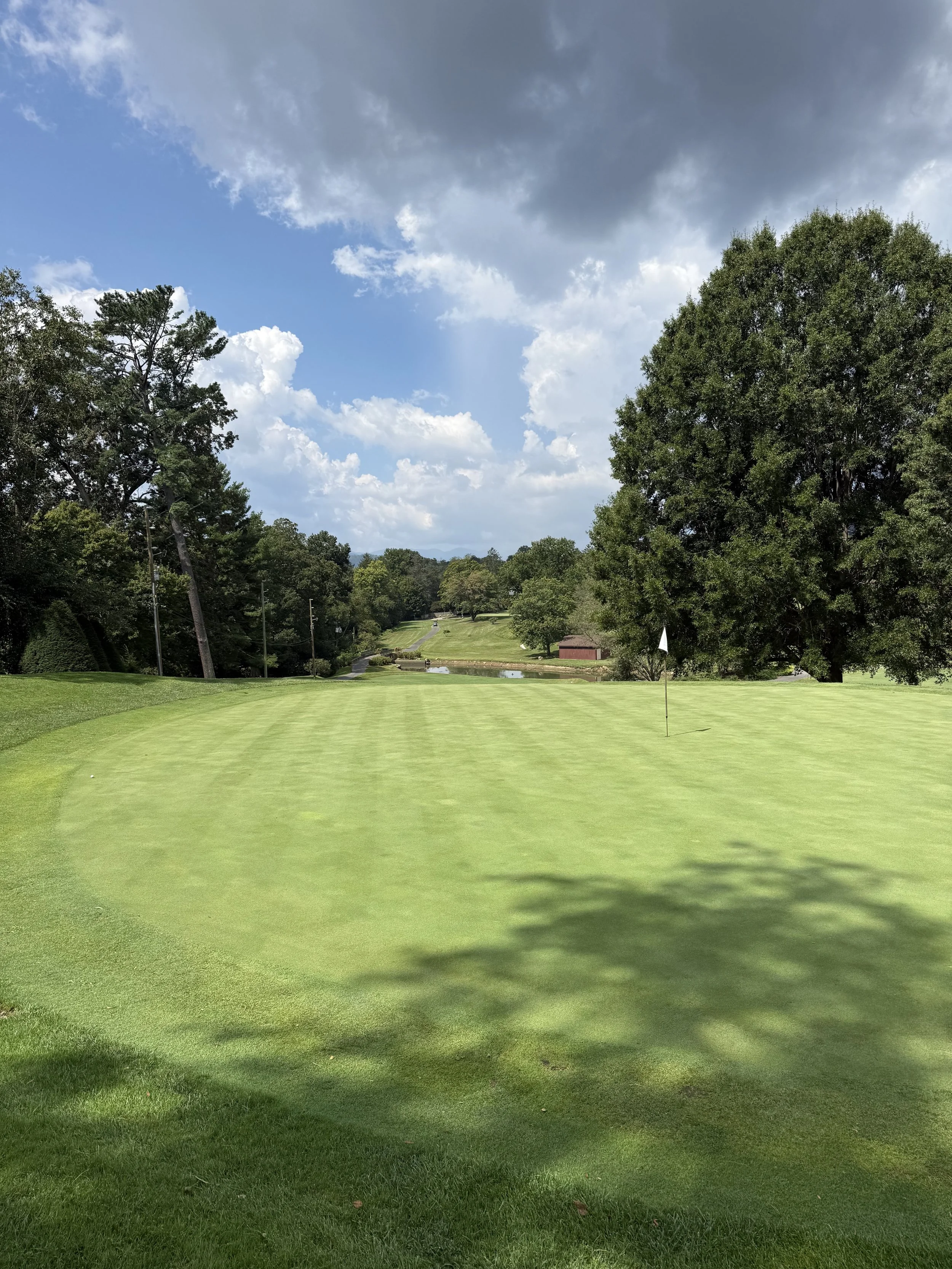
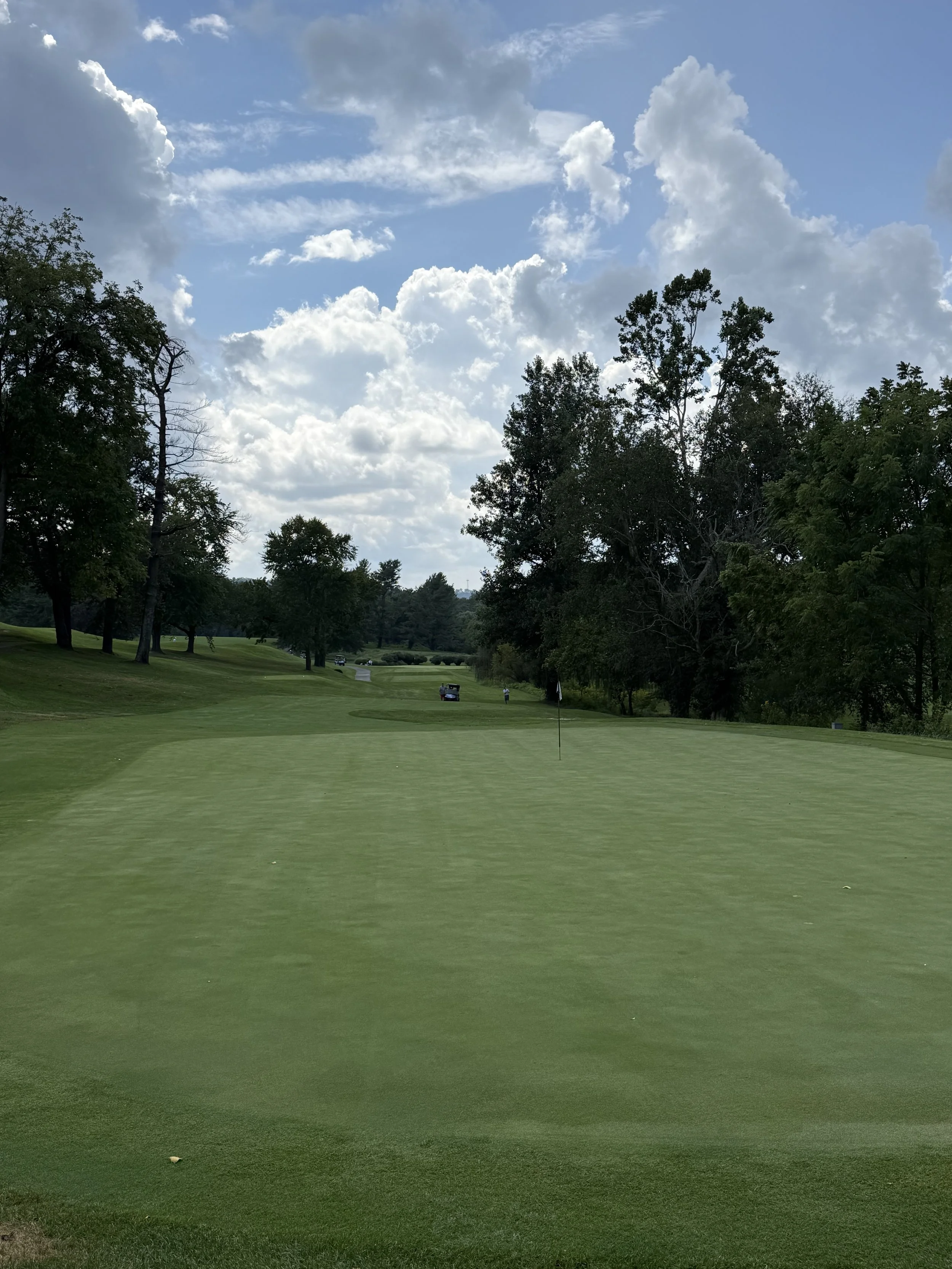
At Grove Park, the land is constantly moving. Uphill and downhill shots are common, level lies are not guaranteed, and judging elevation becomes part of nearly every club selection. Ross had plenty of natural movement to work with, but it is around the greens where his influence is most noticeable.
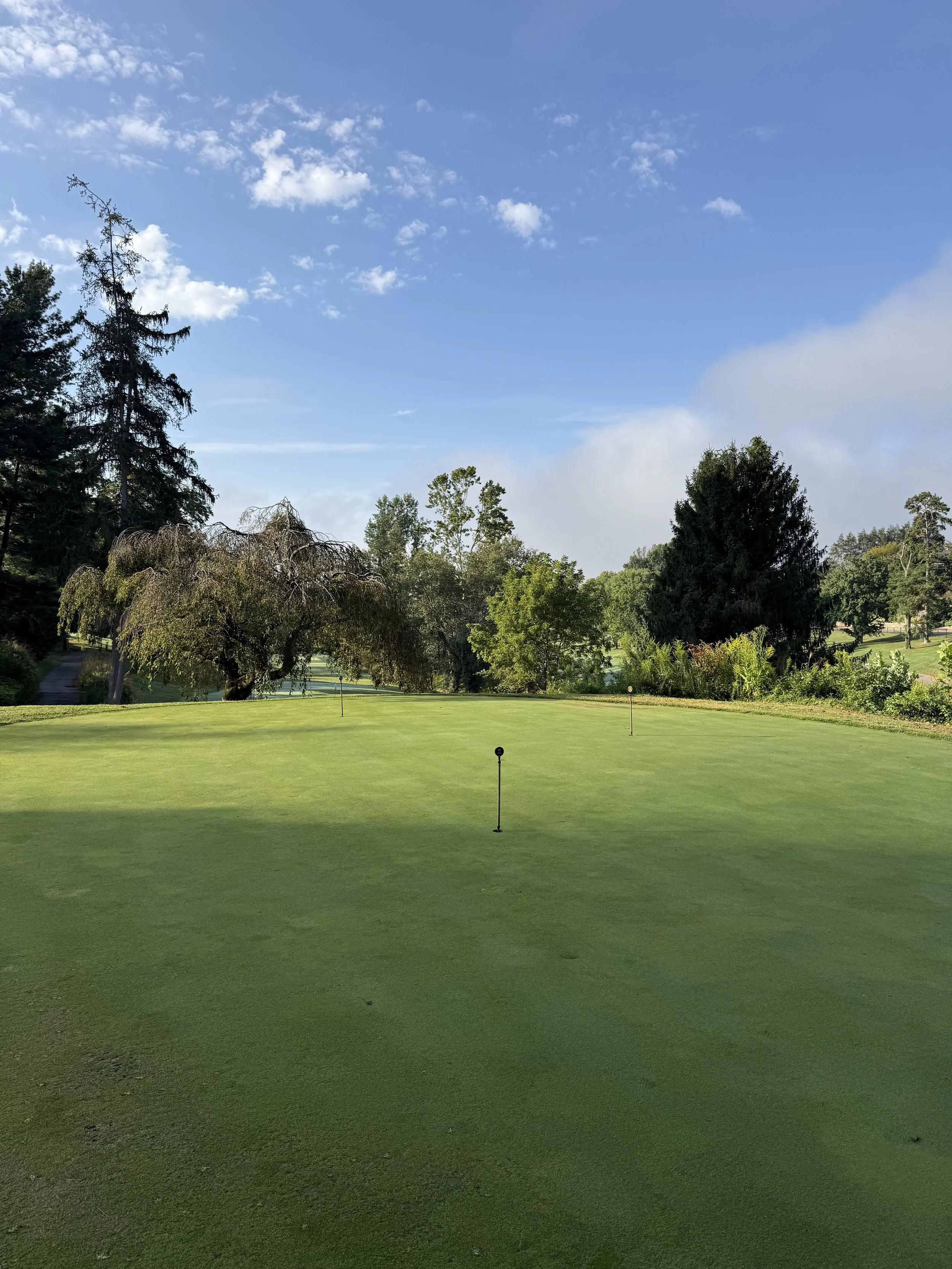
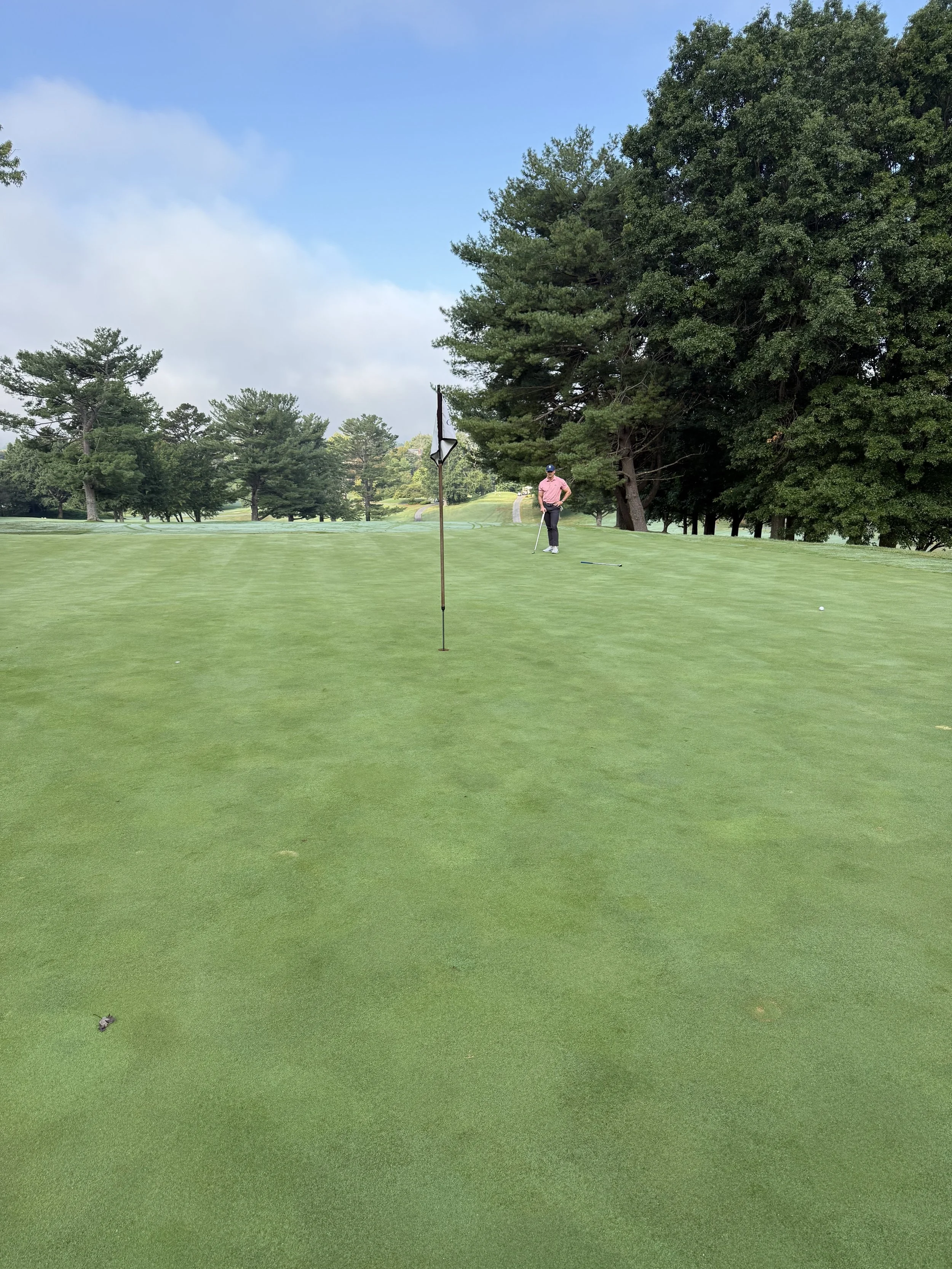
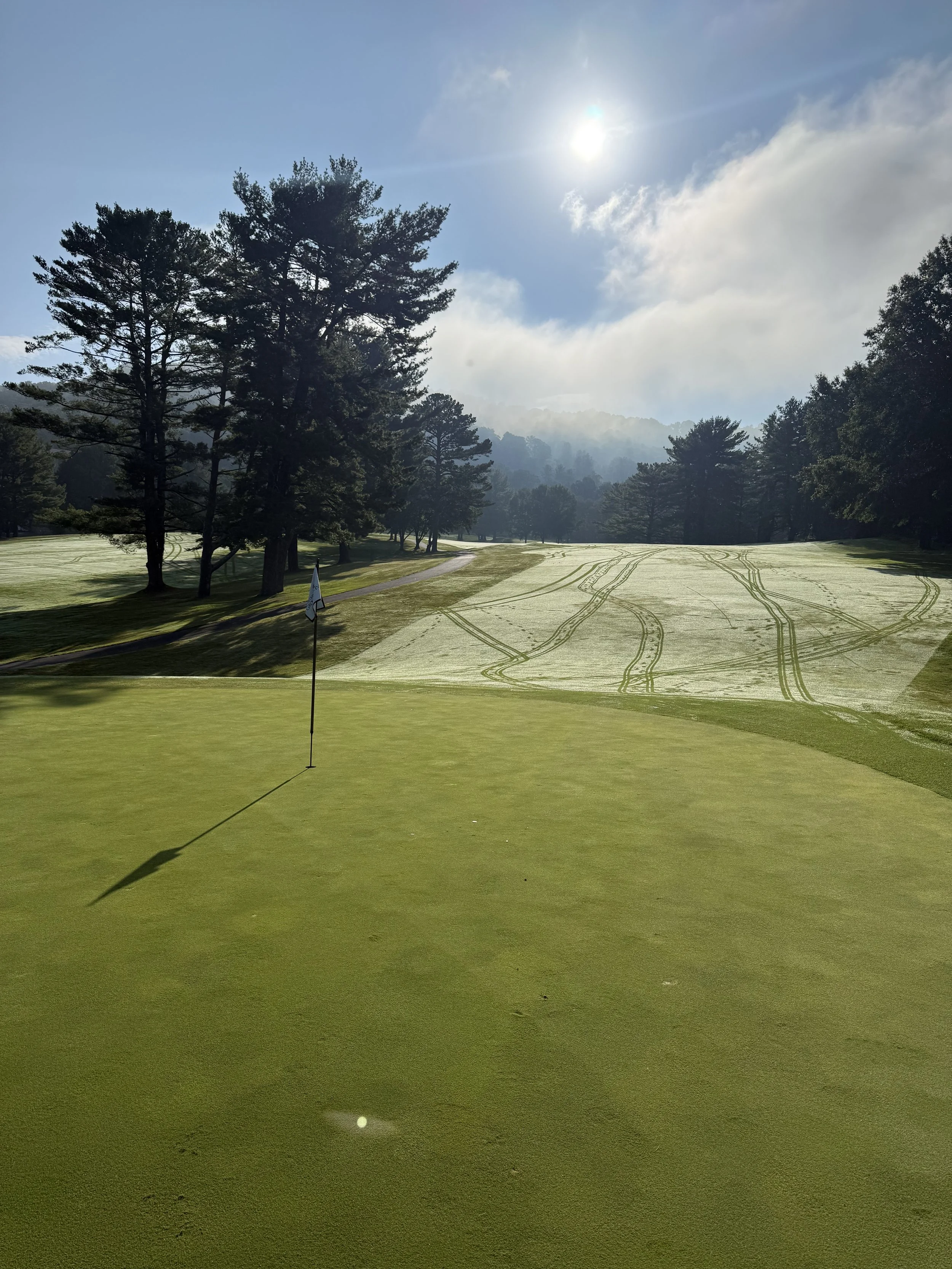
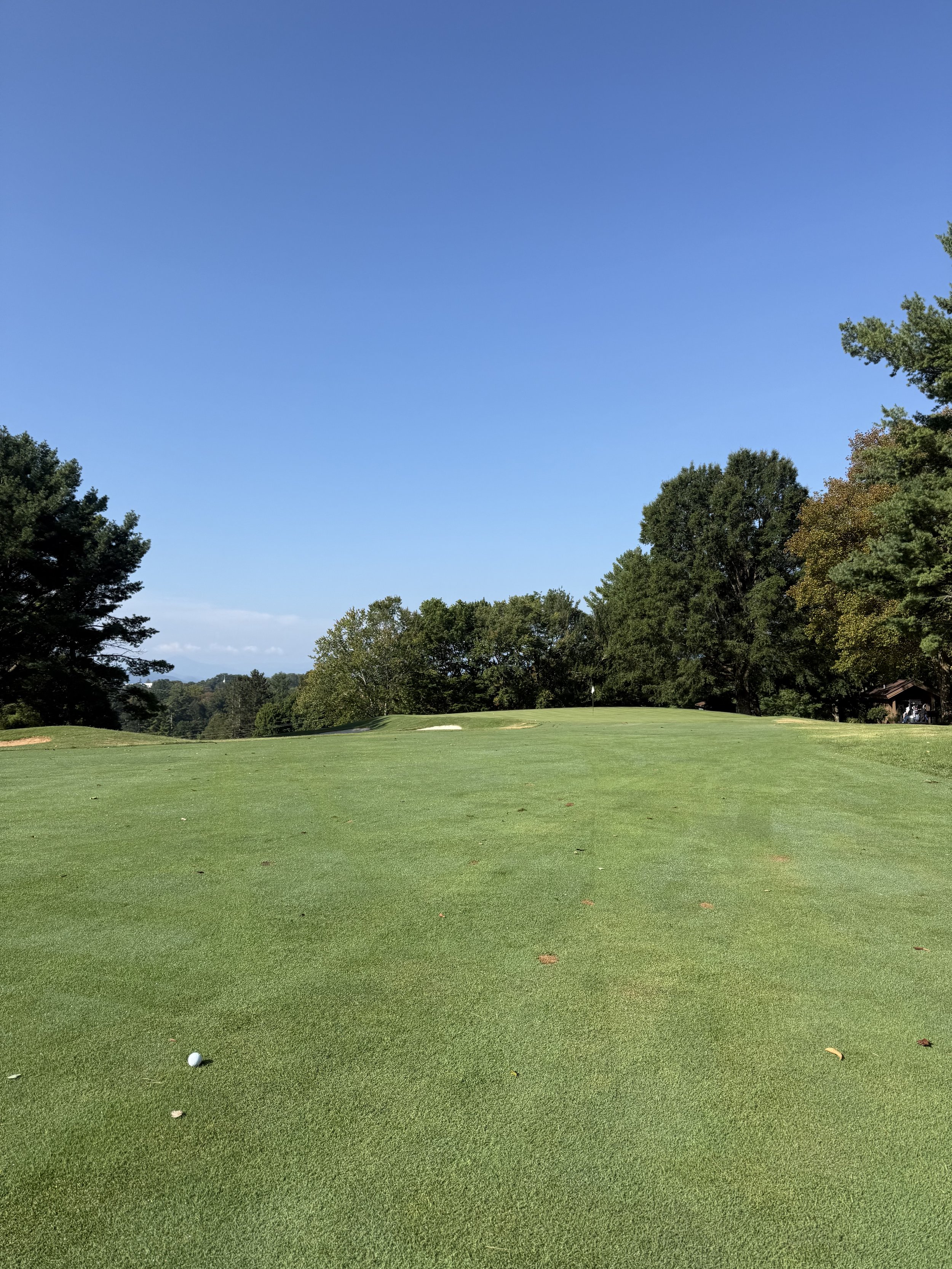
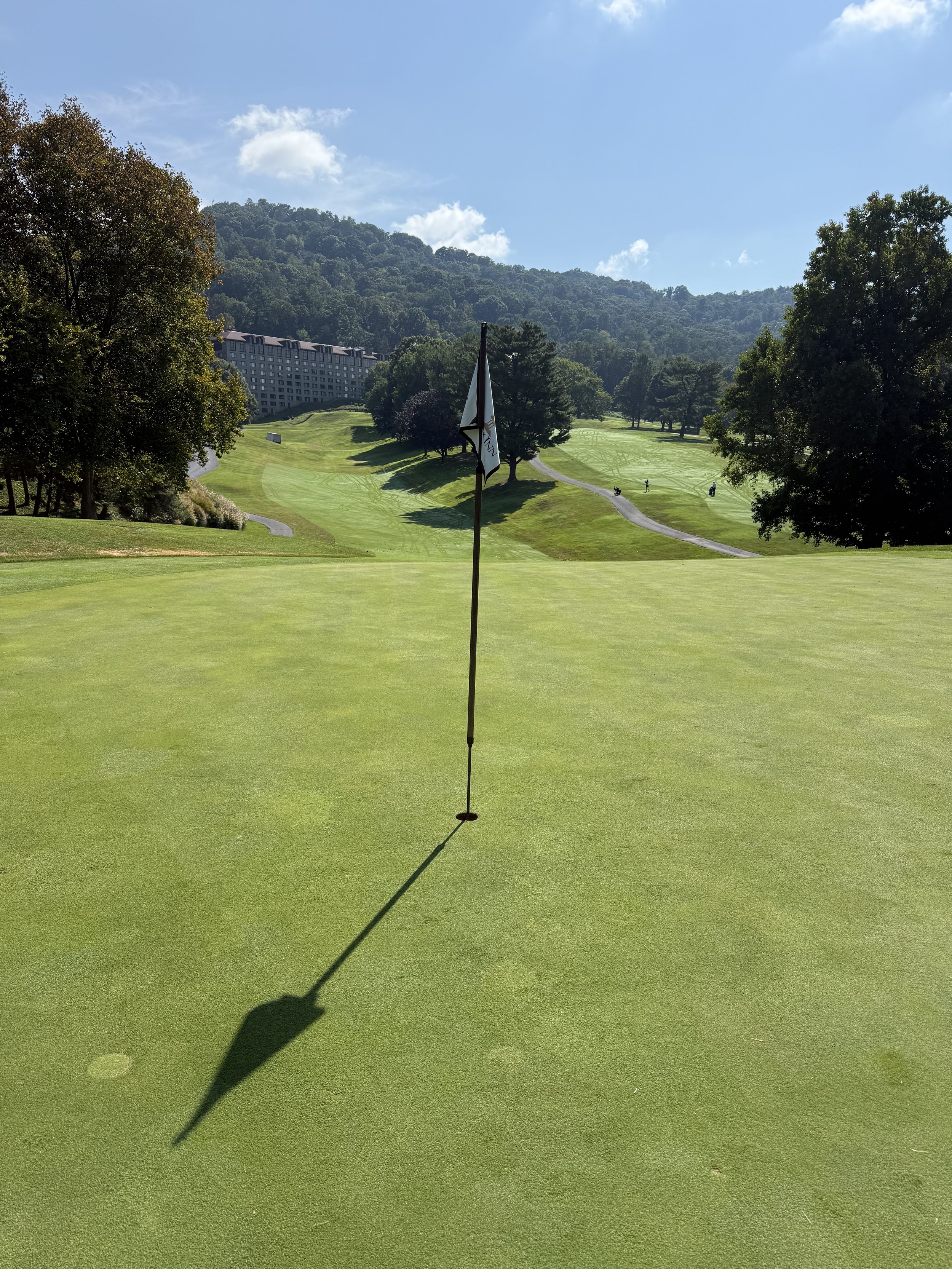
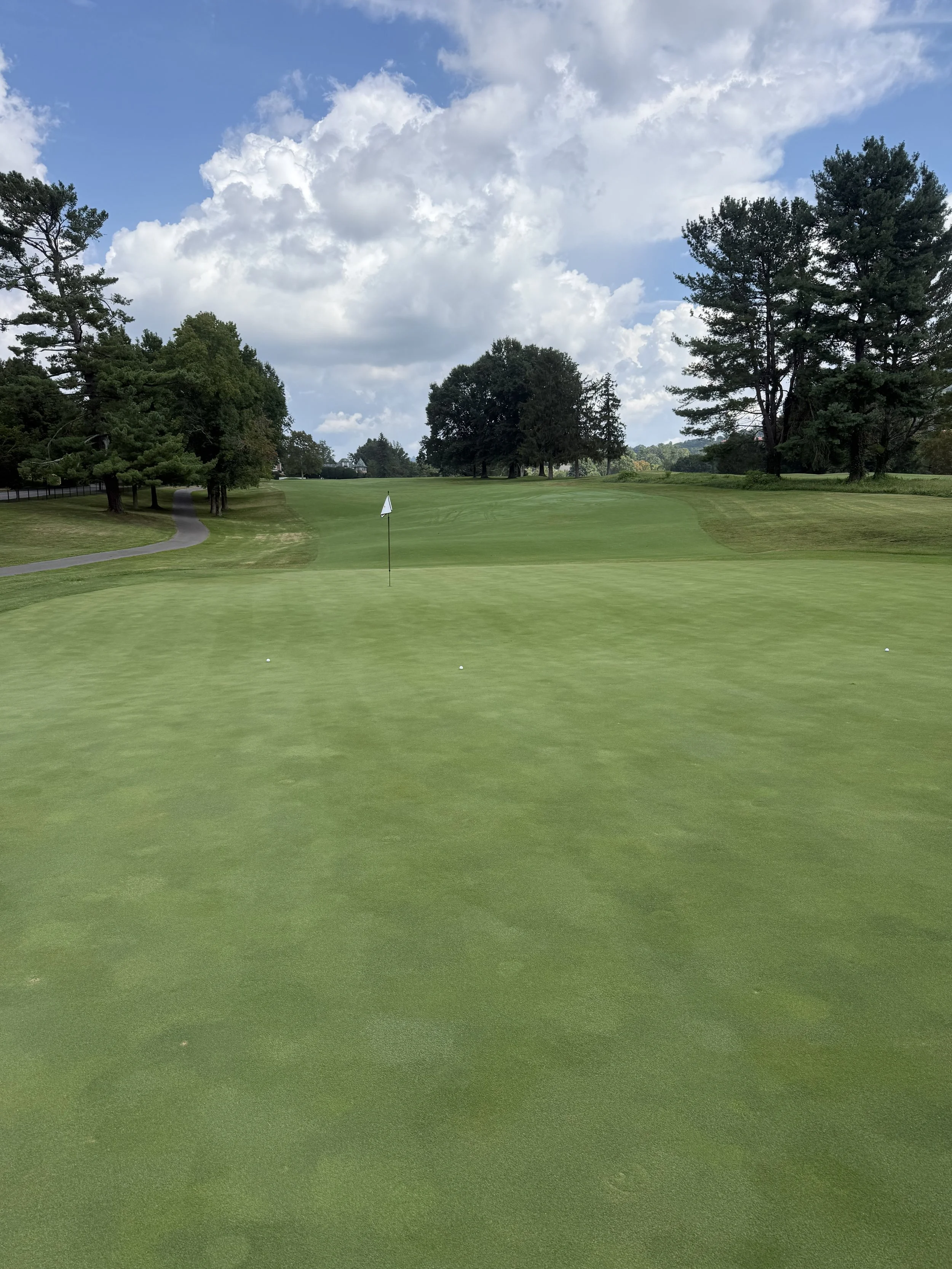
The green complexes provide the course with its real defense. Many are elevated or built in a way that makes the effective target considerably smaller than it first appears. Slopes around the putting surfaces can reject a shot that misses in the wrong direction, and getting above the hole can turn what looks like a relatively simple approach into a much more difficult situation. Missing a green is only half the problem. Where you miss it matters.
That is one of my favorite characteristics of older golf courses. Grove Park does not need another 1,000 yards to remain interesting. The challenge comes from angles, distance control, and understanding what the ground around the green is going to do to your ball. A good drive can put a short iron or wedge in your hand, but that does not necessarily mean the hole is over. The approach still has to be placed correctly.
It is a philosophy found throughout Ross's work. The tee shot establishes position, but the green complex ultimately asks the most important questions. At Grove Park, the combination of those greens with the mountain terrain makes the course play with considerably more character than its overall yardage would suggest.
The course was also in excellent condition during our visit, which allowed those features to really stand out. The greens were firm enough that you had to think about where the ball would finish rather than simply firing at the flag. Around them, the short grass and slopes provided several options when you missed. Sometimes putting was available. Other times a bump and run made more sense. And occasionally you were left trying to manufacture a shot simply because you had missed on the wrong side.
For me, that is much more interesting than a golf course whose primary defense is length.
The history behind the golf at Grove Park is equally interesting, and it is a little more complicated than I initially realized.
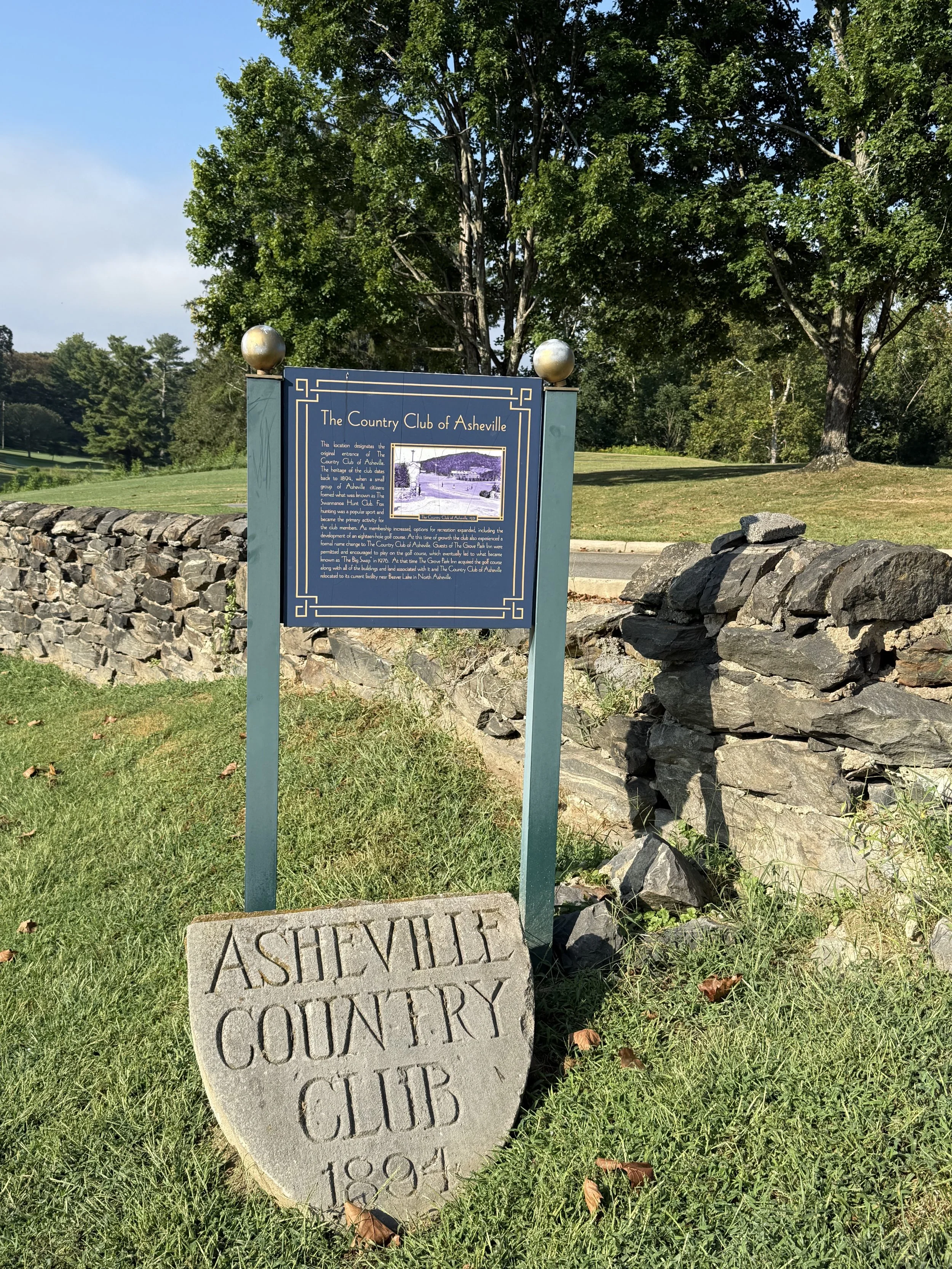
Golf in this part of Asheville actually predates the Grove Park Inn itself. The Country Club of Asheville traces its roots to 1894, when a small group of Asheville residents formed what was then known as the Swannanoa Hunt Club. As membership grew, the club expanded its recreational offerings and eventually developed an eighteen hole golf course.
When the Grove Park Inn opened in 1913, guests of the new resort were permitted and encouraged to play the neighboring Country Club of Asheville course. Golf was therefore connected to the Grove Park experience well before Ross entered the picture in the 1920s.
The two histories eventually became even more intertwined.
While playing Sunday morning, I came across a historical marker on the course explaining a fascinating chapter known as “The Big Swap.” In 1976, the Grove Park Inn acquired the Country Club of Asheville golf course, along with the buildings and land associated with it. The Country Club of Asheville then relocated to its current home near Beaver Lake in North Asheville.
The transaction adds another layer to the history of the course and helps explain why tracing Grove Park's evolution is more complicated than simply looking at Ross's work from 1926 and assuming the property has remained unchanged ever since. The golf course and the land around it have evolved considerably over the past century, with the stories of Grove Park and the Country Club of Asheville eventually becoming intertwined. I always enjoy finding something on a golf course that sends me down a rabbit hole after I leave, and Grove Park has plenty of history worth digging into.
The golf course is also only one part of the larger Grove Park experience.
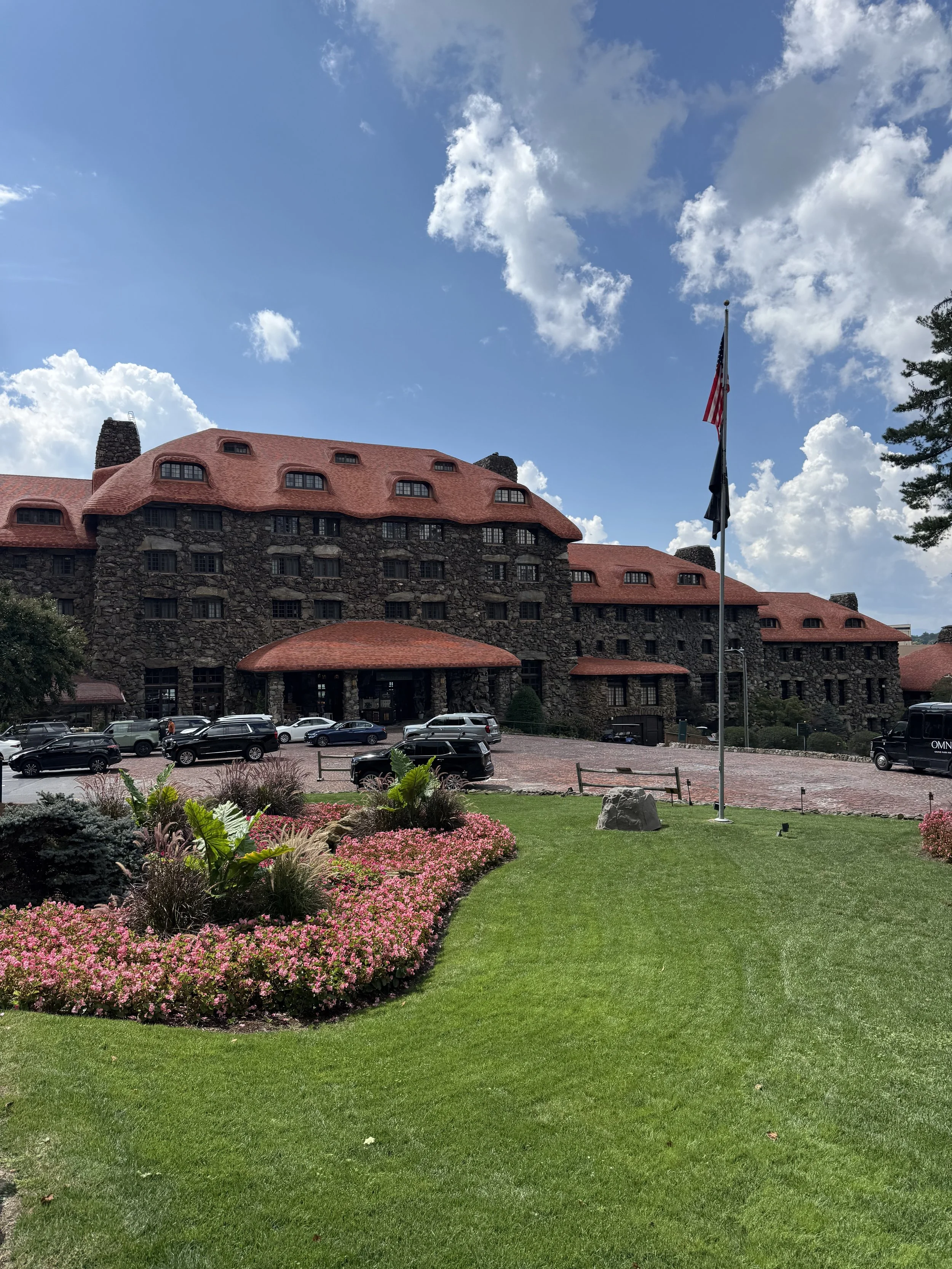
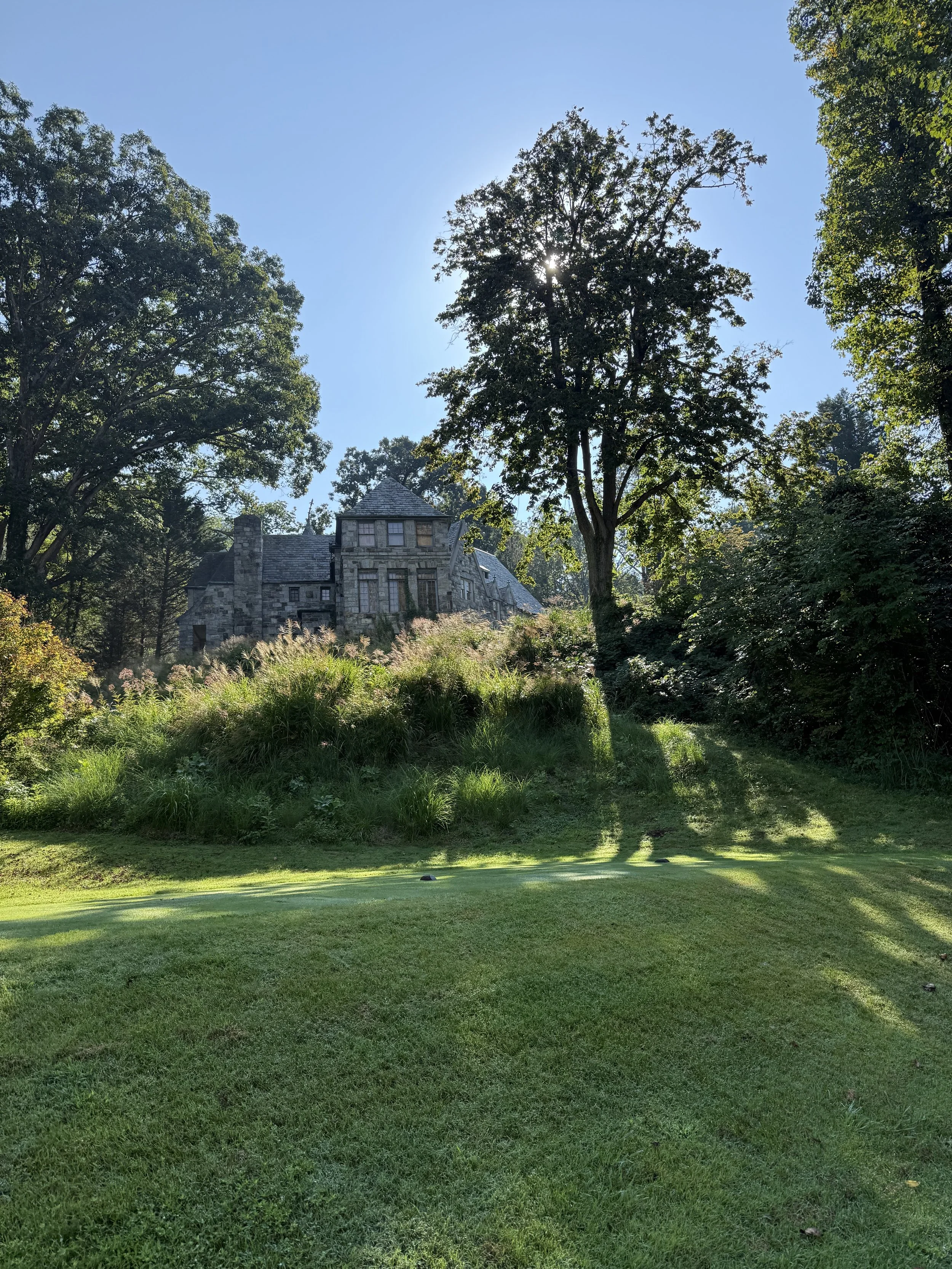
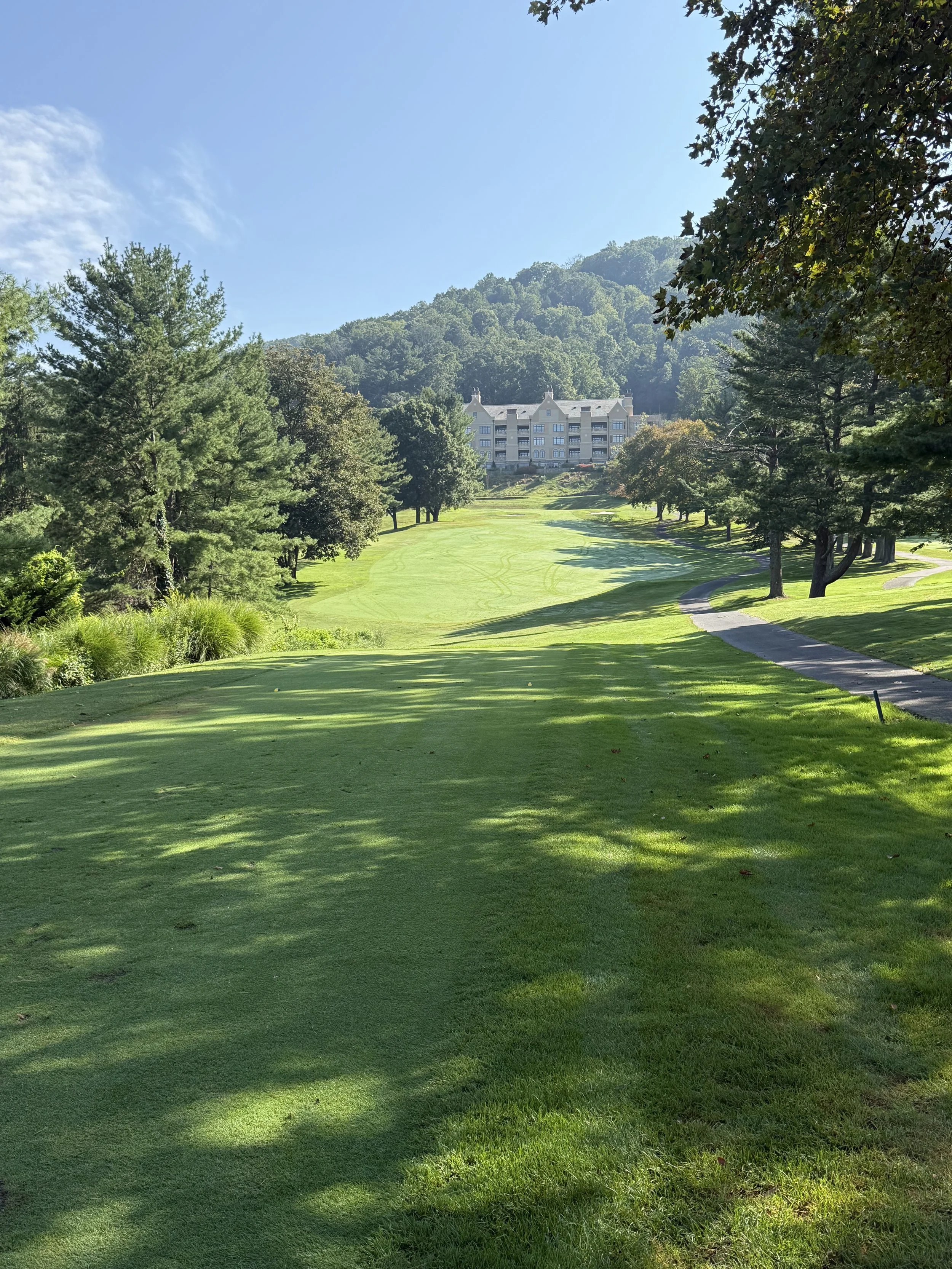
The Grove Park Inn opened in 1913 and has become one of the most recognizable historic resorts in the Southeast. The enormous stone exterior looks almost as if it grew out of the mountainside, while the massive fireplaces, terraces, and views across the Blue Ridge Mountains give the property a character that would be nearly impossible to recreate today.
The property also fits nicely within Omni Hotels & Resorts' broader golf portfolio. Omni operates a collection of notable golf destinations around the country, including The Homestead in Virginia, Bedford Springs in Pennsylvania, Barton Creek in Austin, and the newer PGA Frisco development in Texas. Grove Park feels particularly at home alongside the historic properties in that group, where golf is an important part of the experience without necessarily being the only reason to visit.
That was ultimately what I enjoyed most about our morning at Grove Park.
If you looked only at the scorecard, it would be easy to overlook the course. It is not particularly long, and there are plenty of places where you will have a short club in your hands. But that is also missing the point.
Grove Park makes you earn your score around the greens. Ross's influence is still felt in the way the putting surfaces and their surrounds place a premium on controlling your approach, choosing the proper angle, and leaving the ball in a position where the next shot is manageable. Combine that style of golf with the elevation changes of Western North Carolina, nearly a century of golf history, the unusual story of the Big Swap, and one of the South's great historic resorts sitting above the course, and there is a lot more here than the yardage on the card would suggest.
For Tyler and I, it was an excellent Sunday morning of golf and a great addition to a Labor Day weekend spent enjoying the cooler temperatures of Western North Carolina.